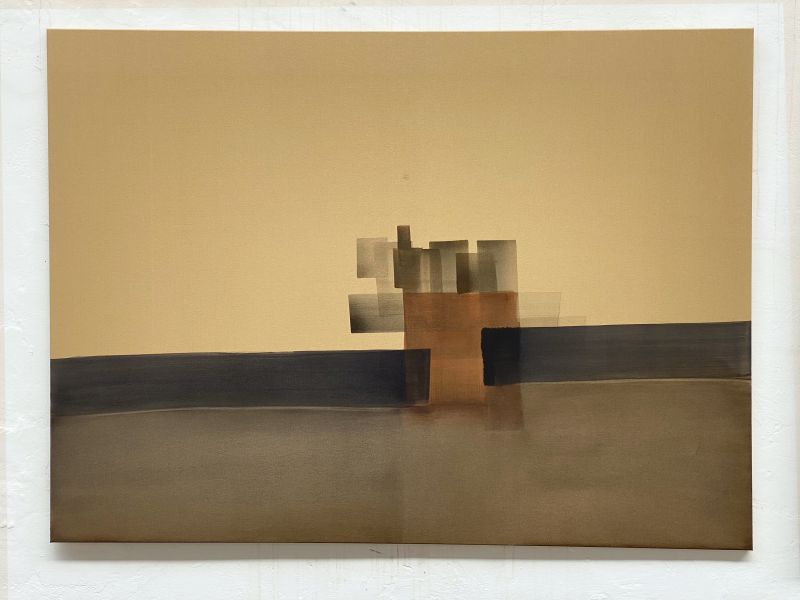
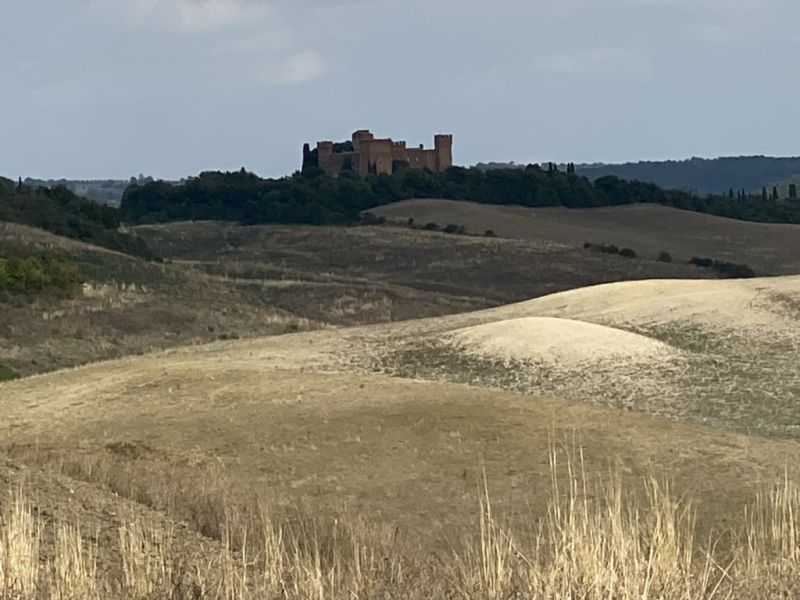
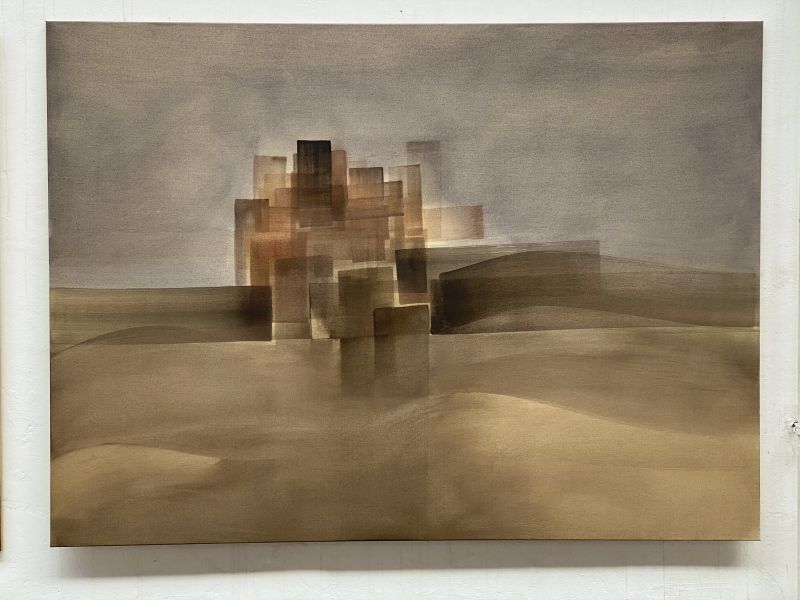
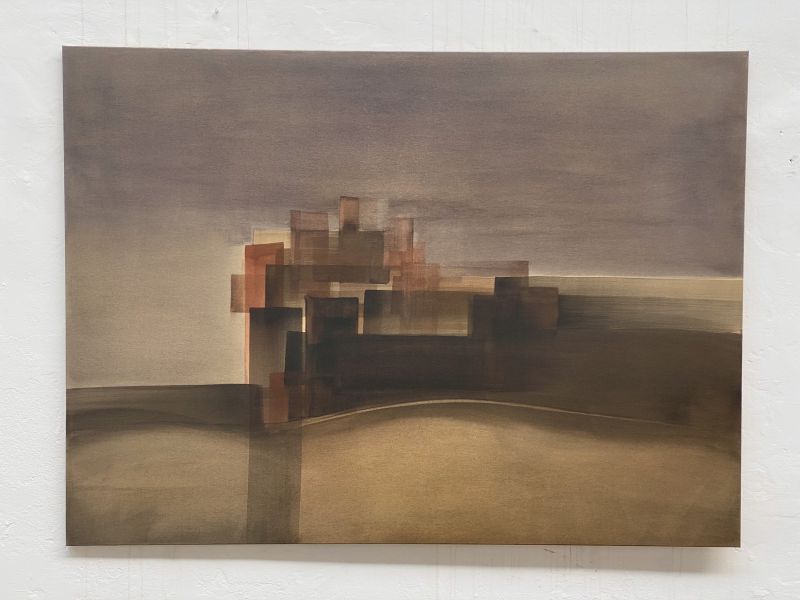
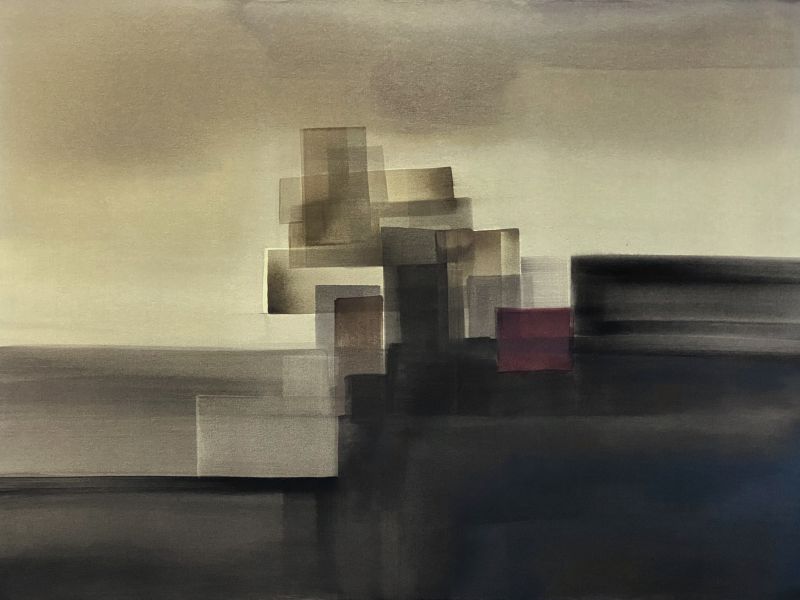
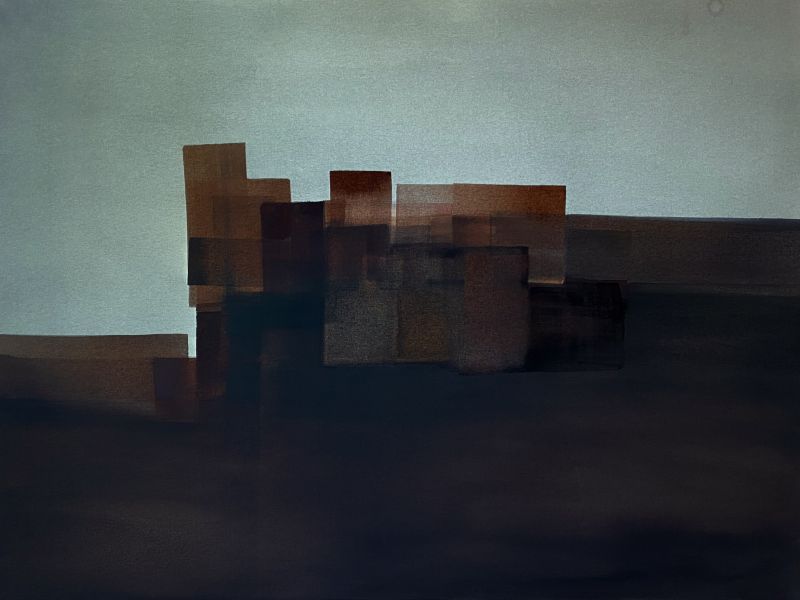
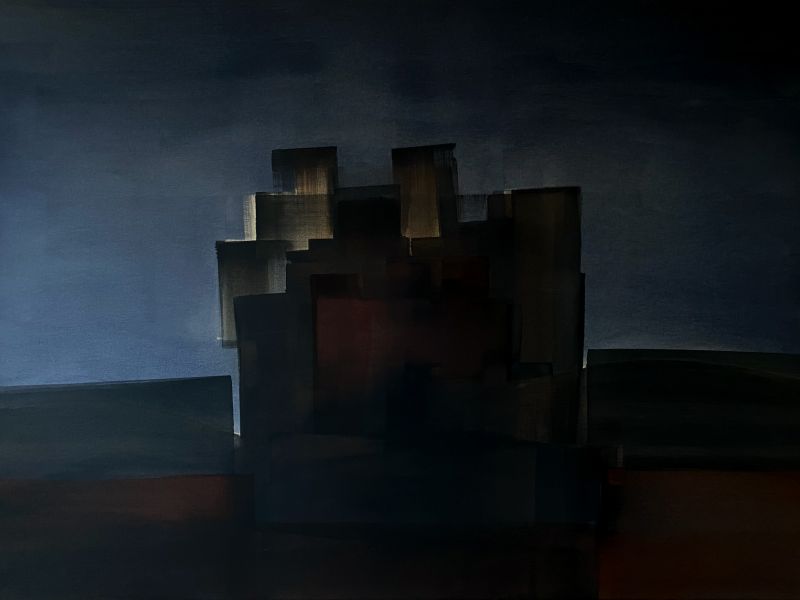
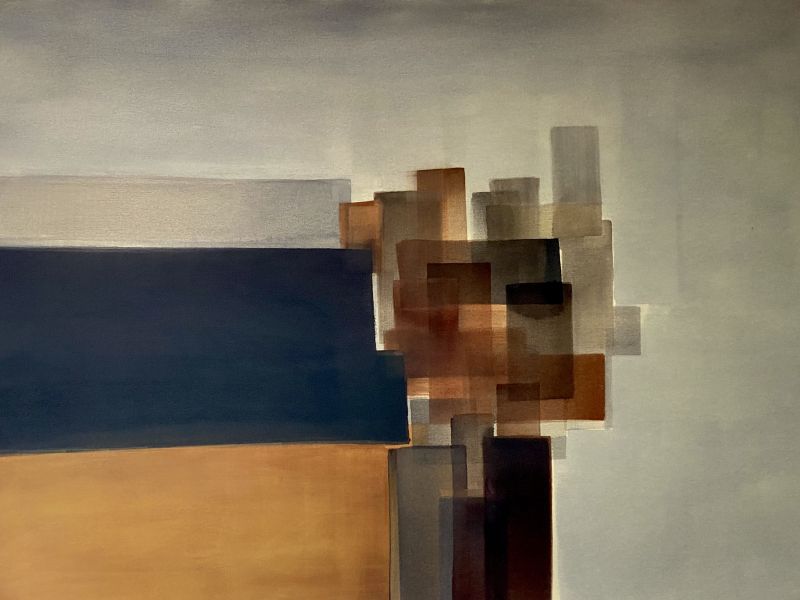
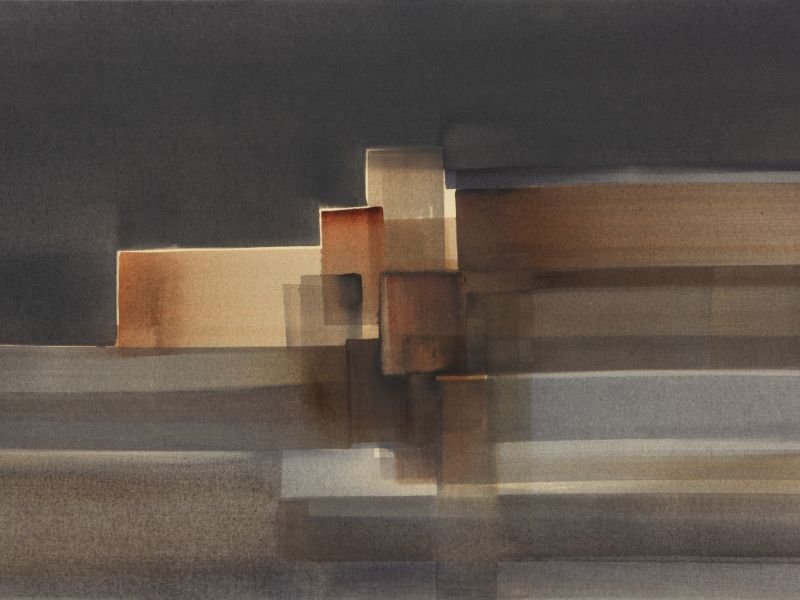
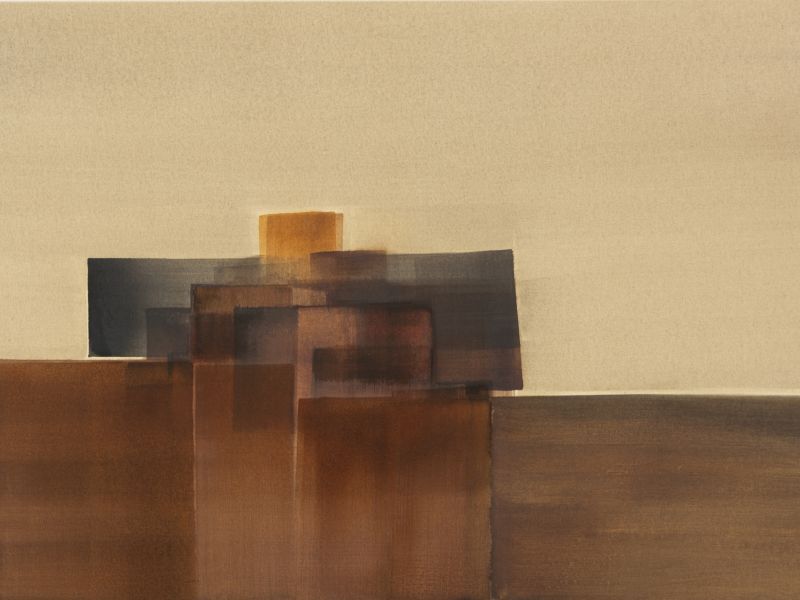
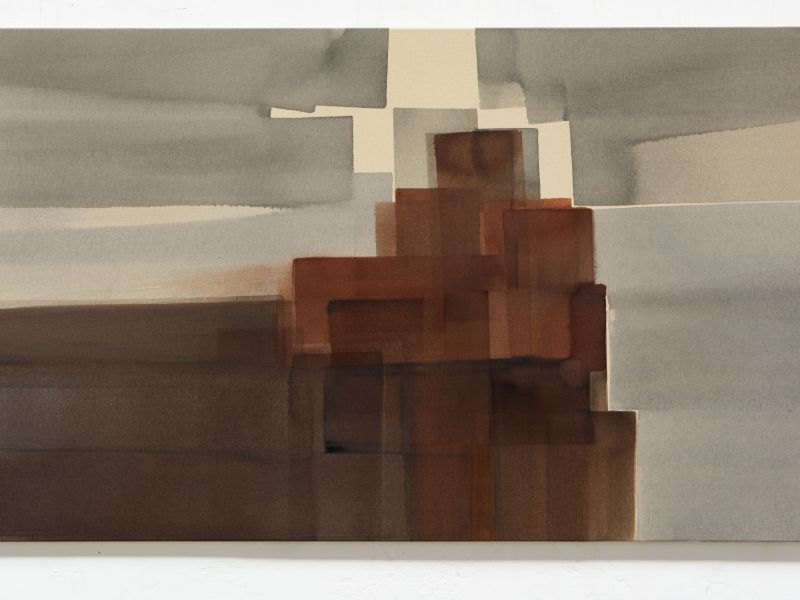
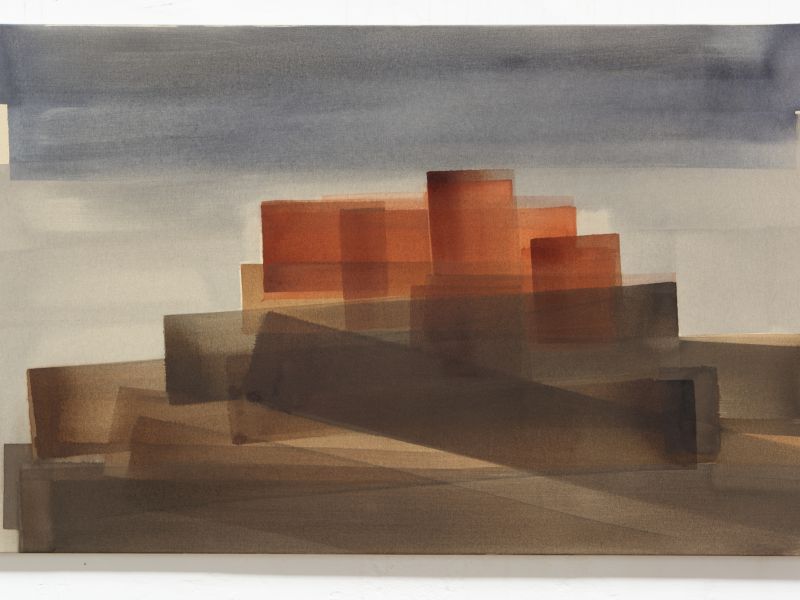
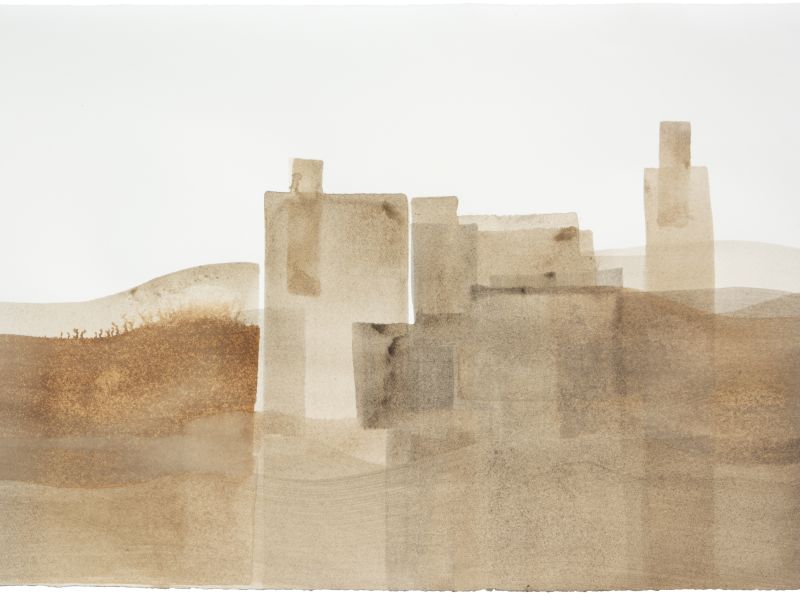
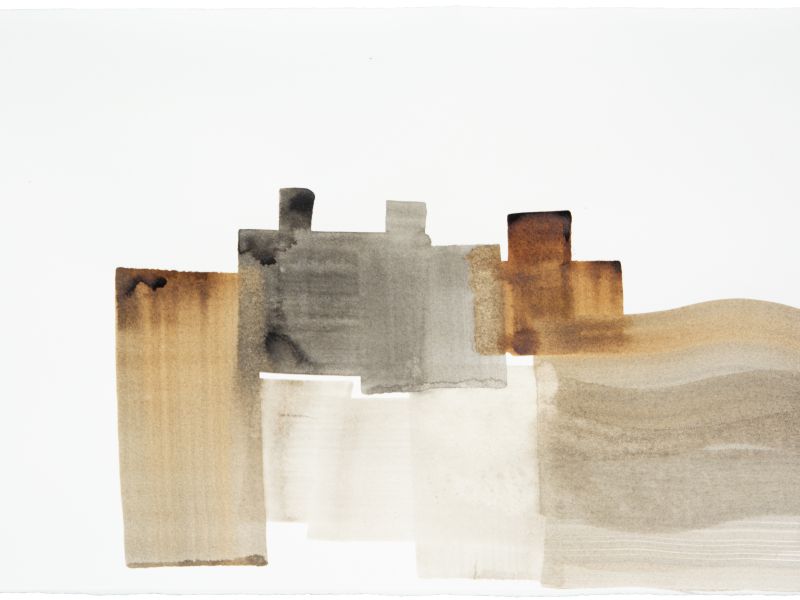
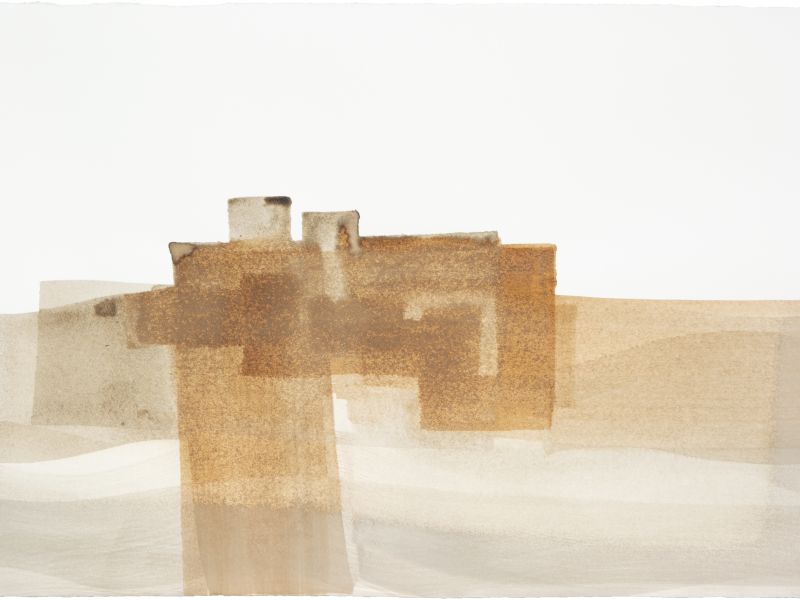
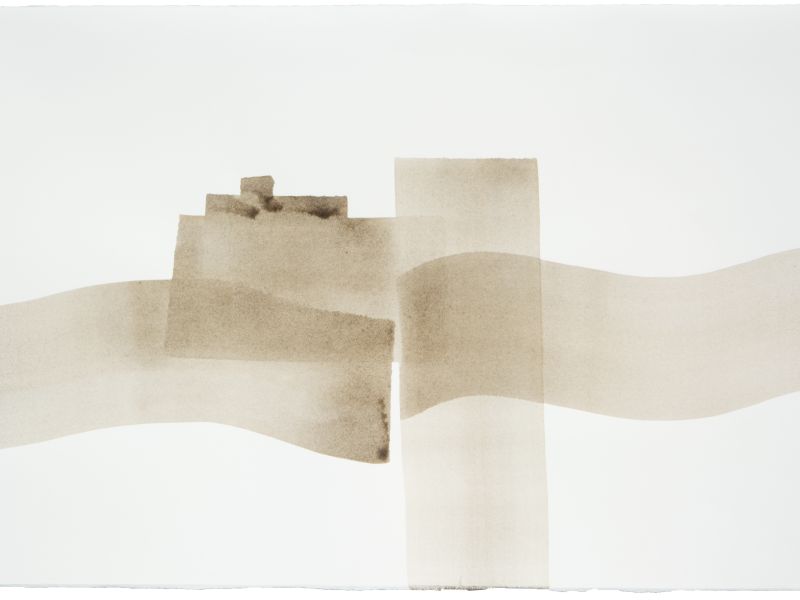
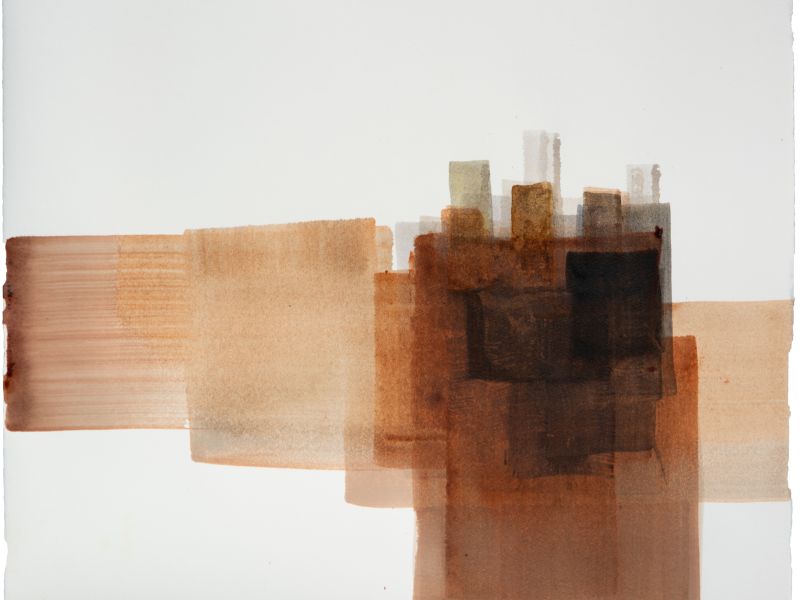
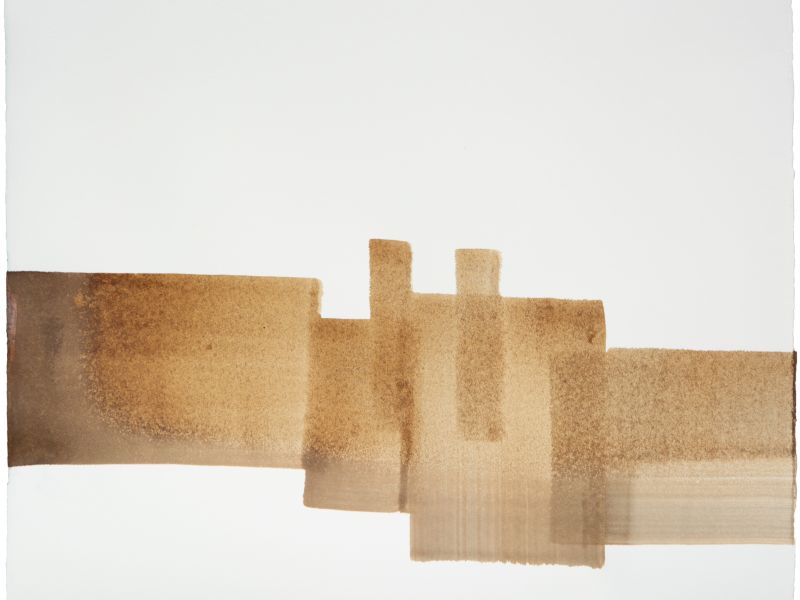
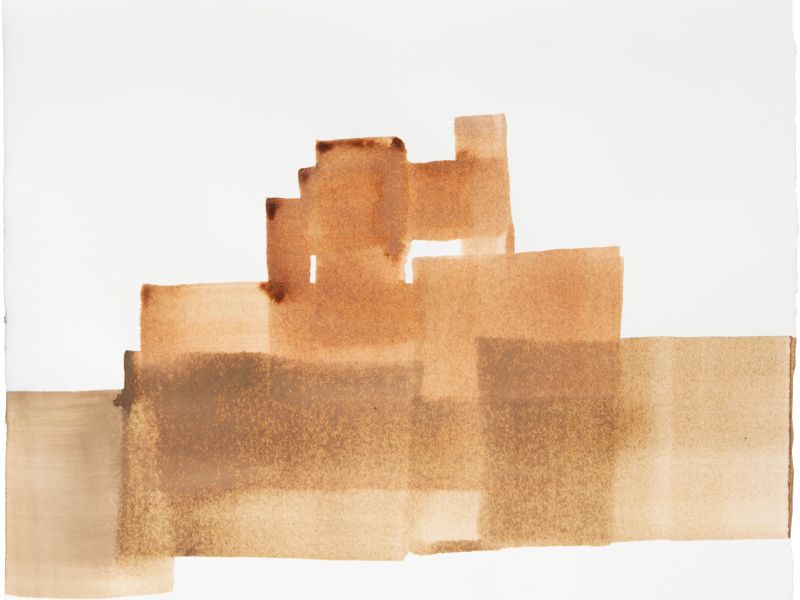
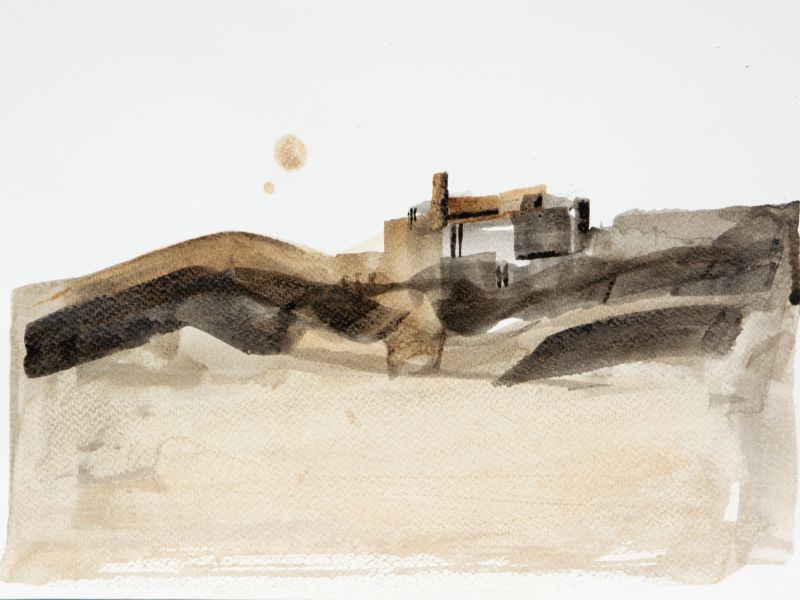
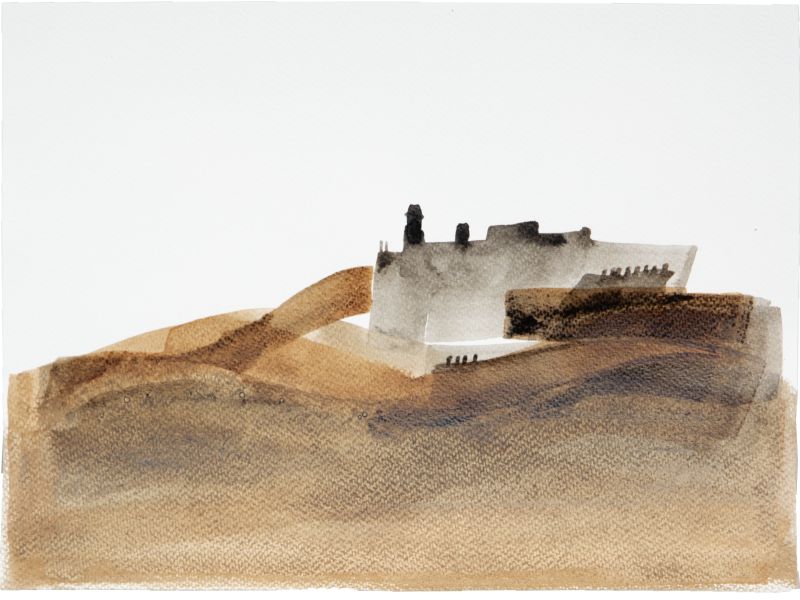
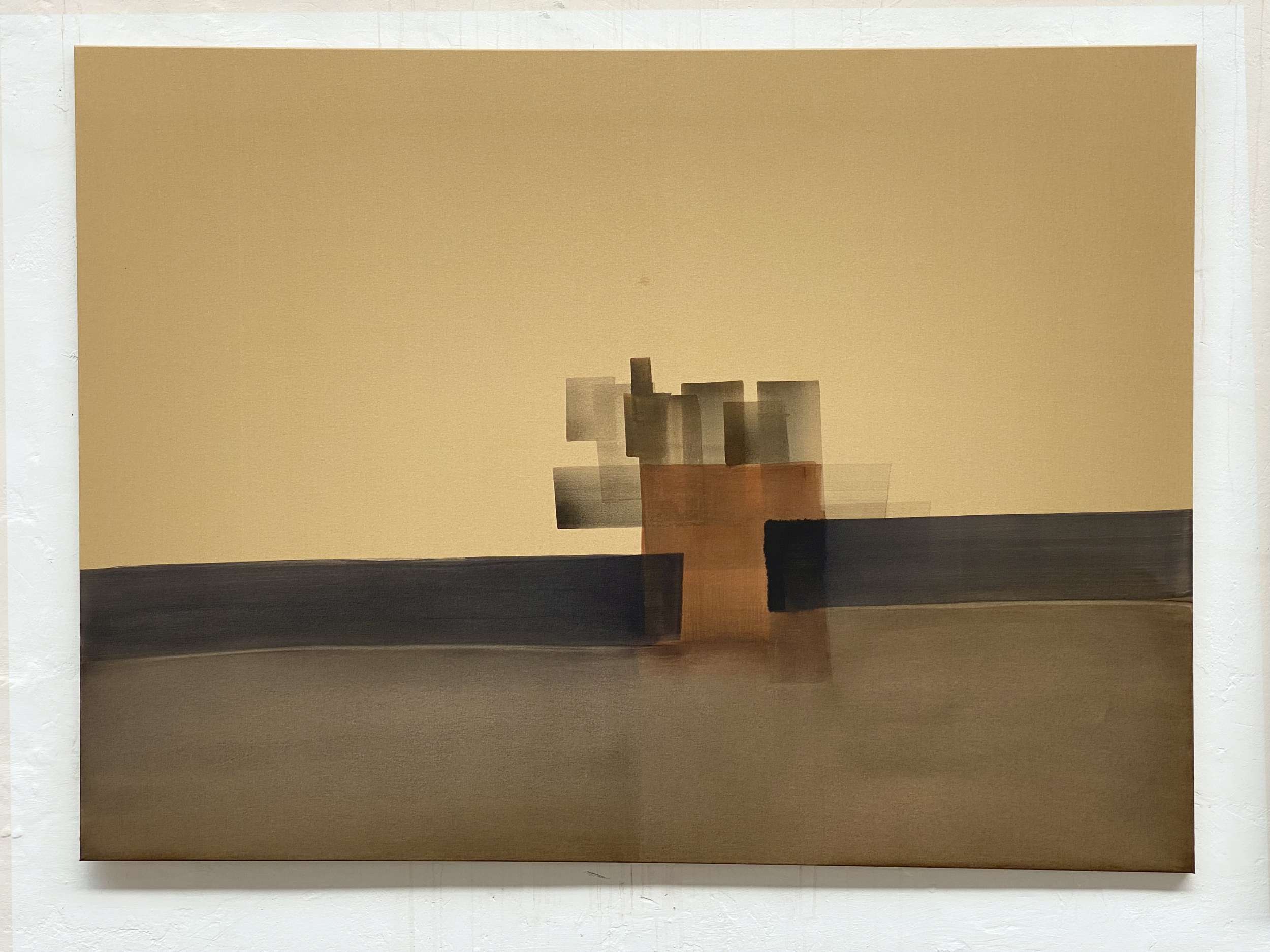
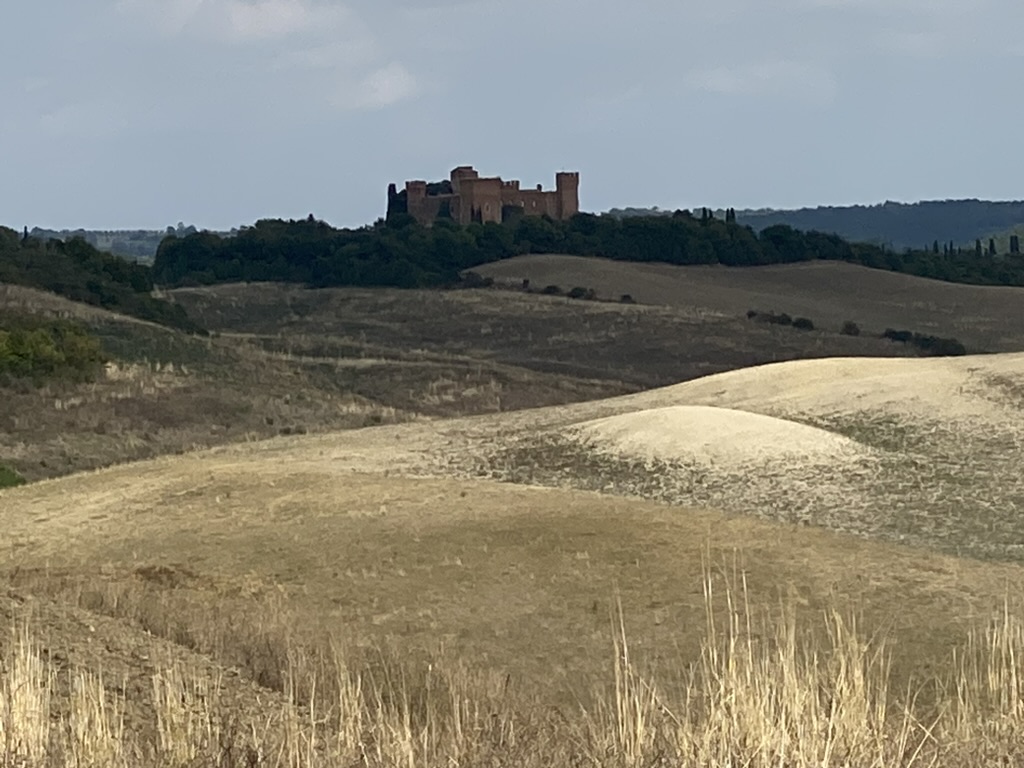
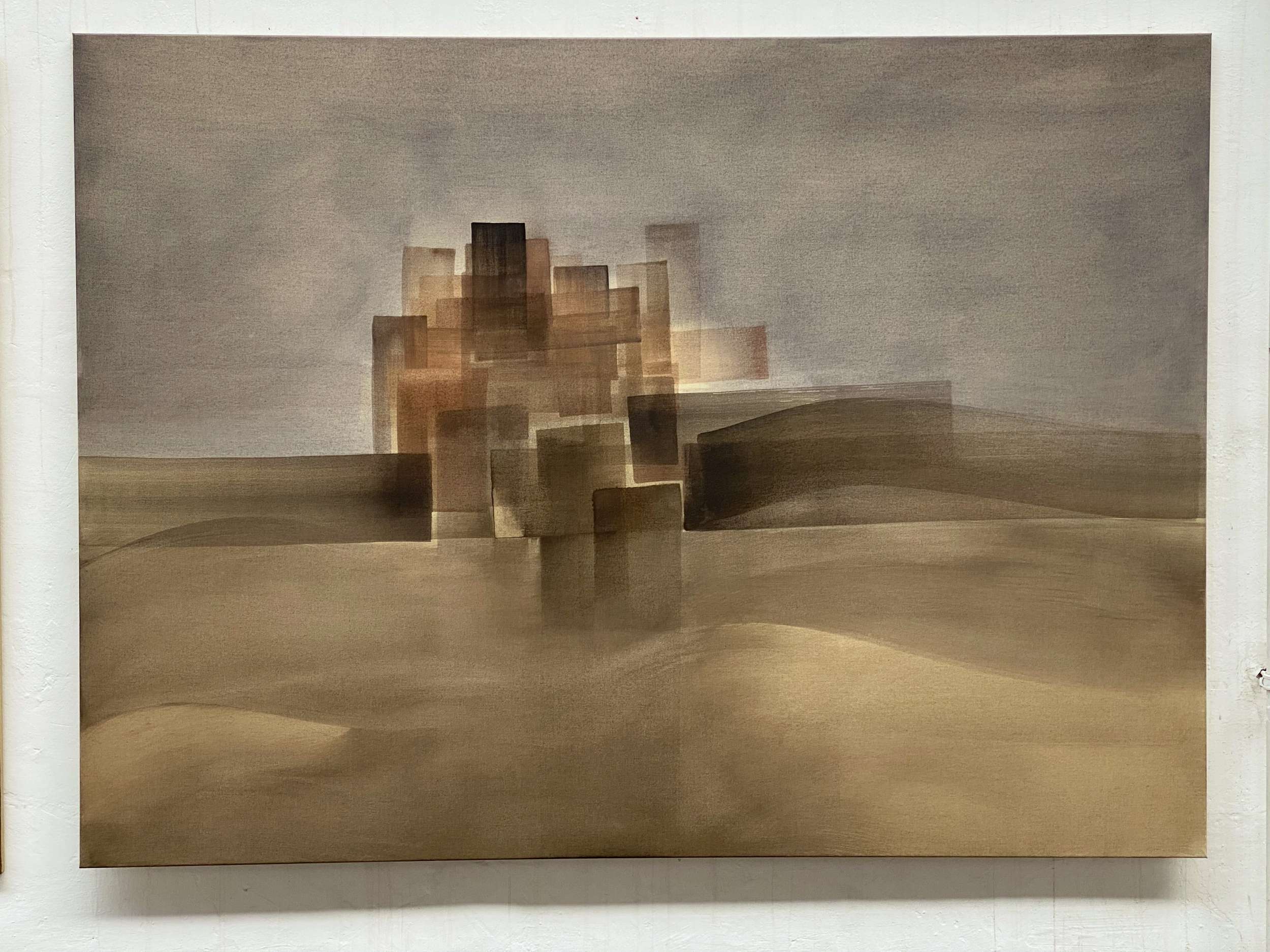
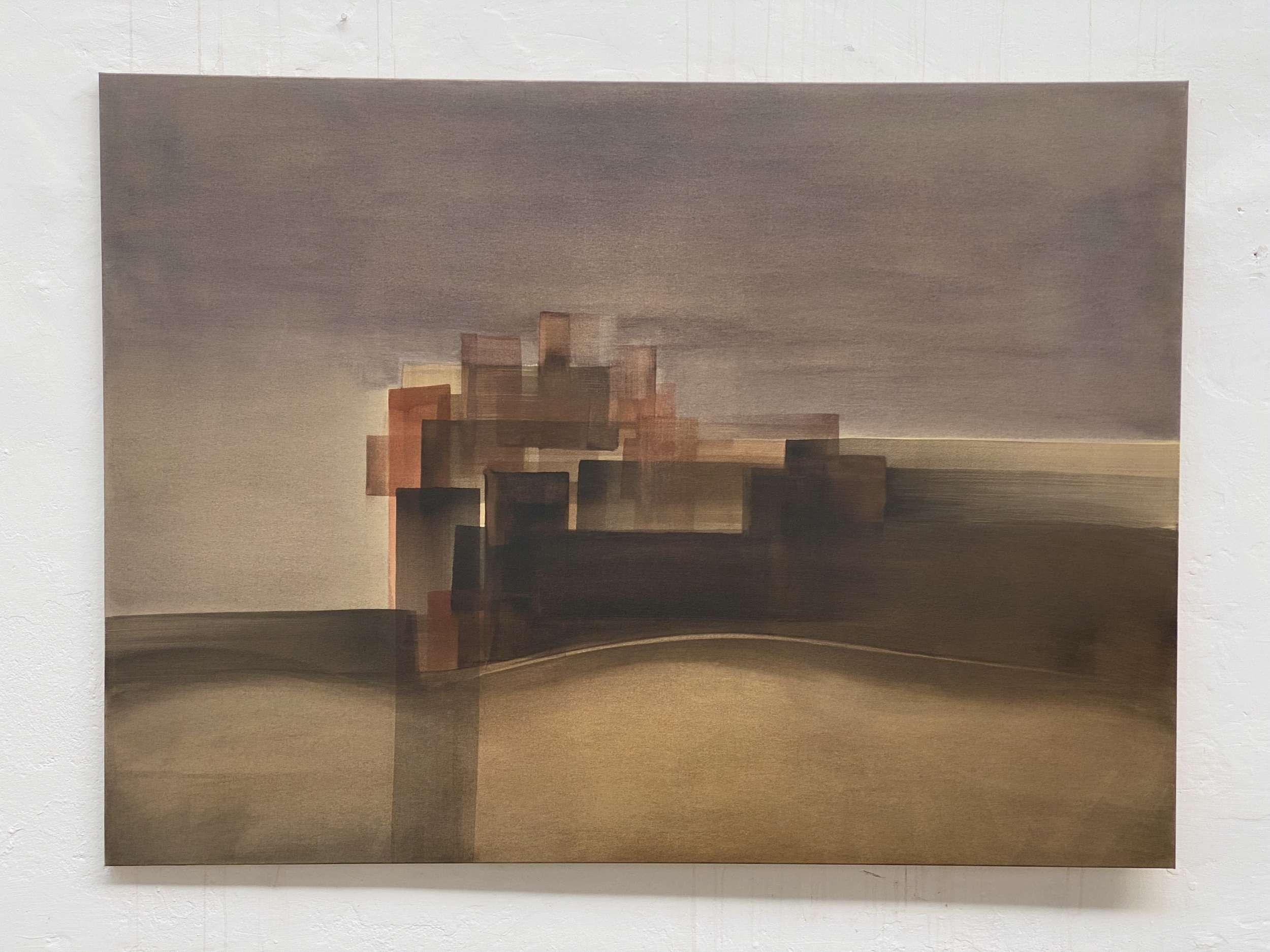
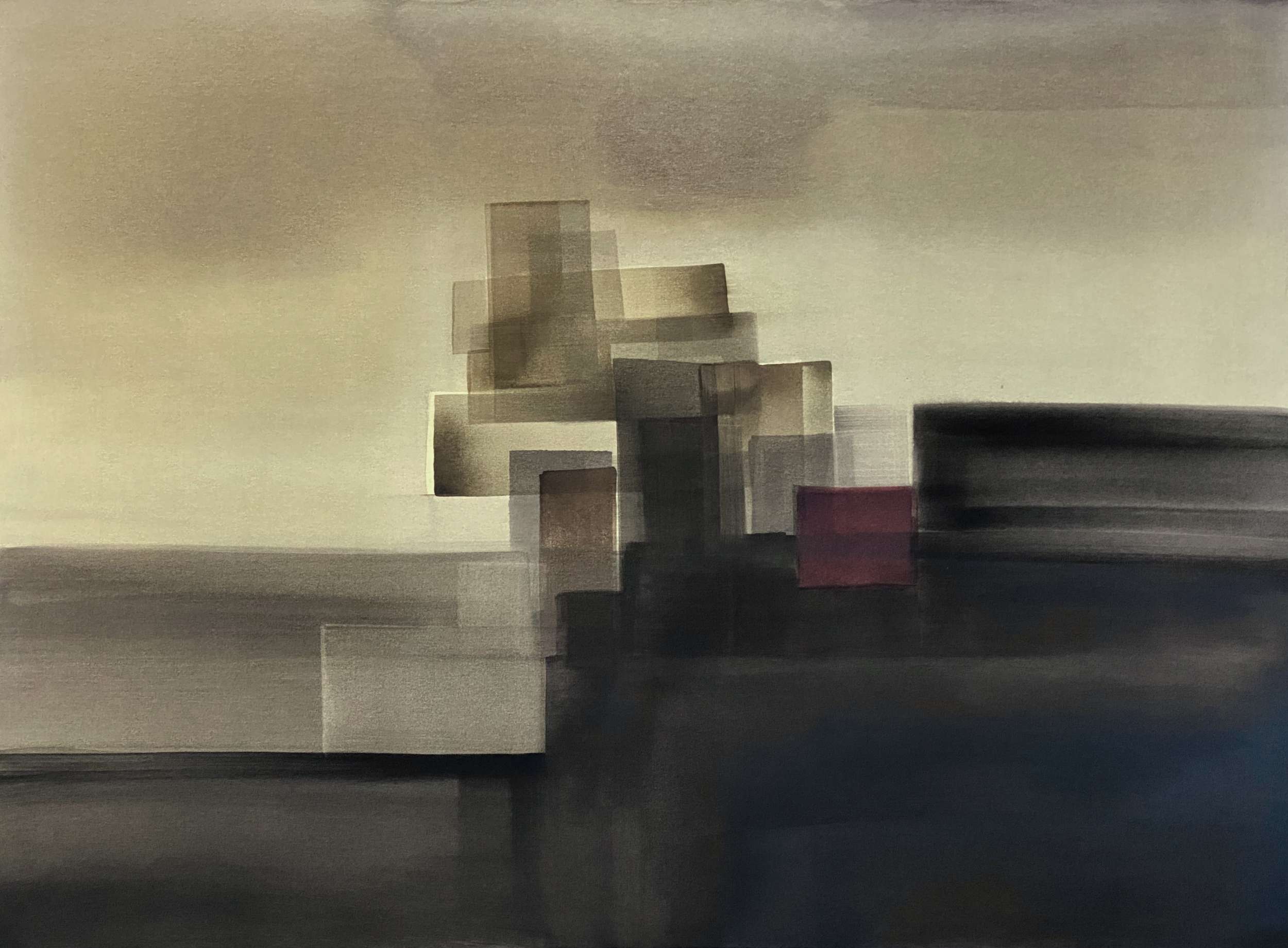
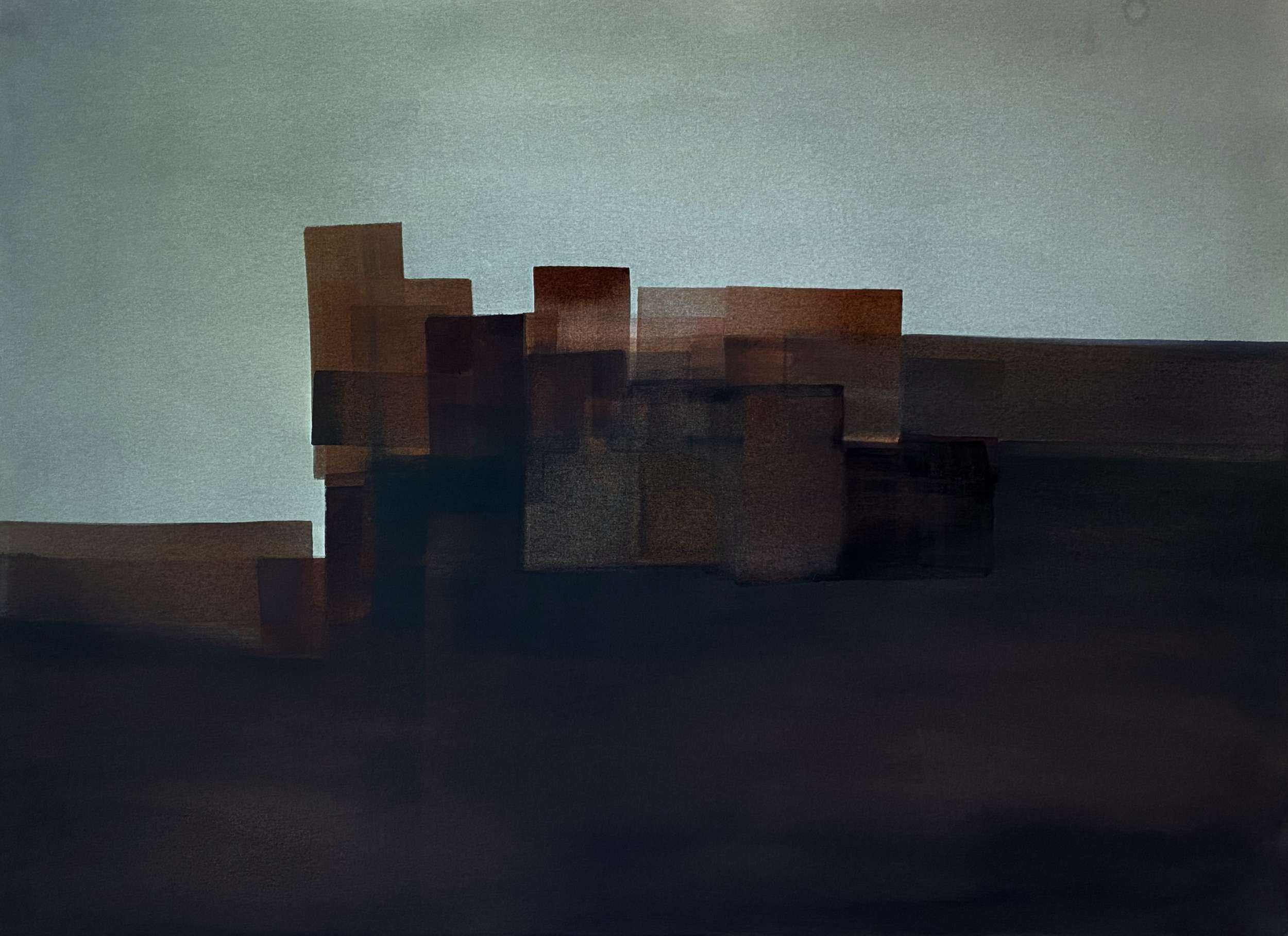
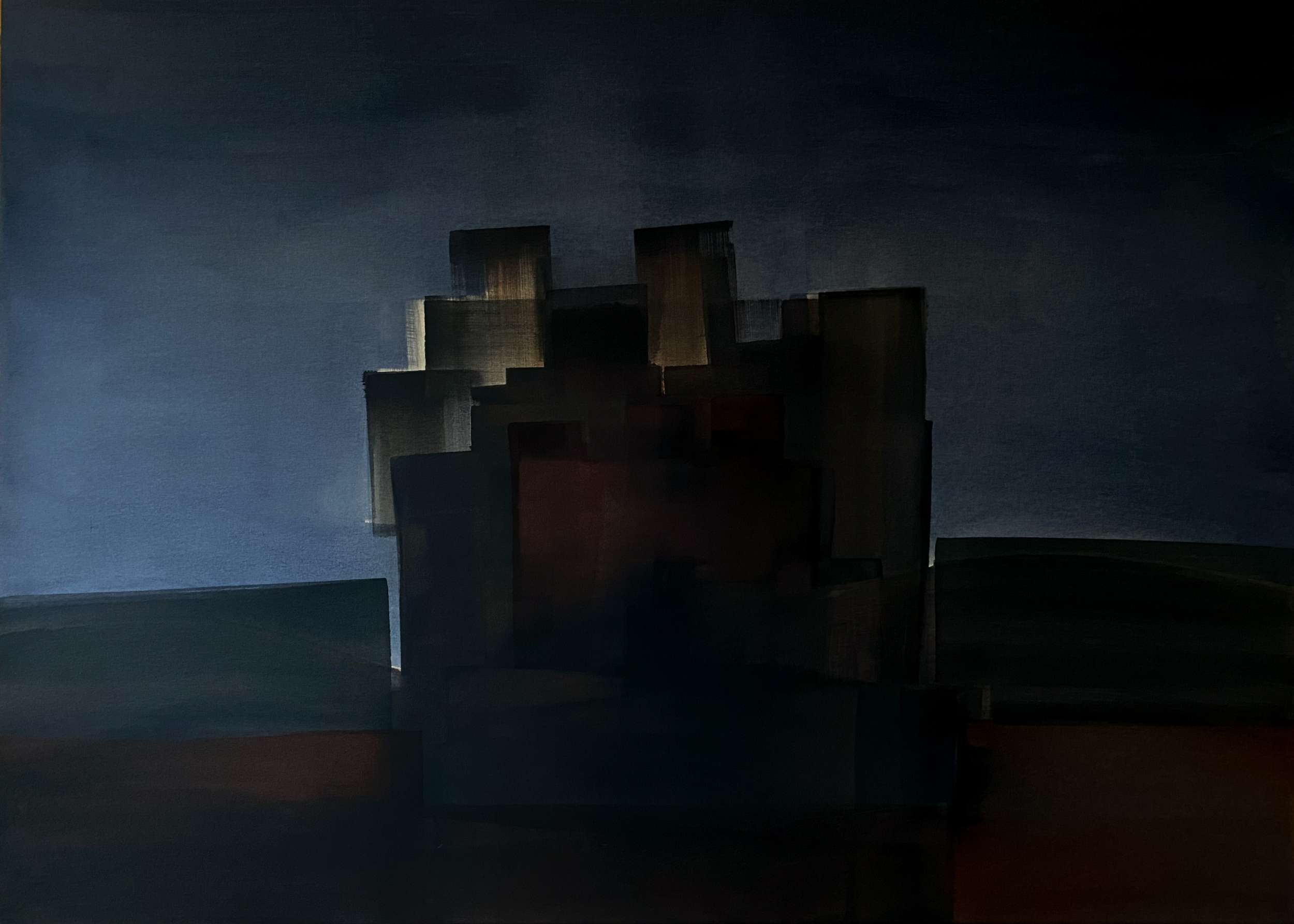
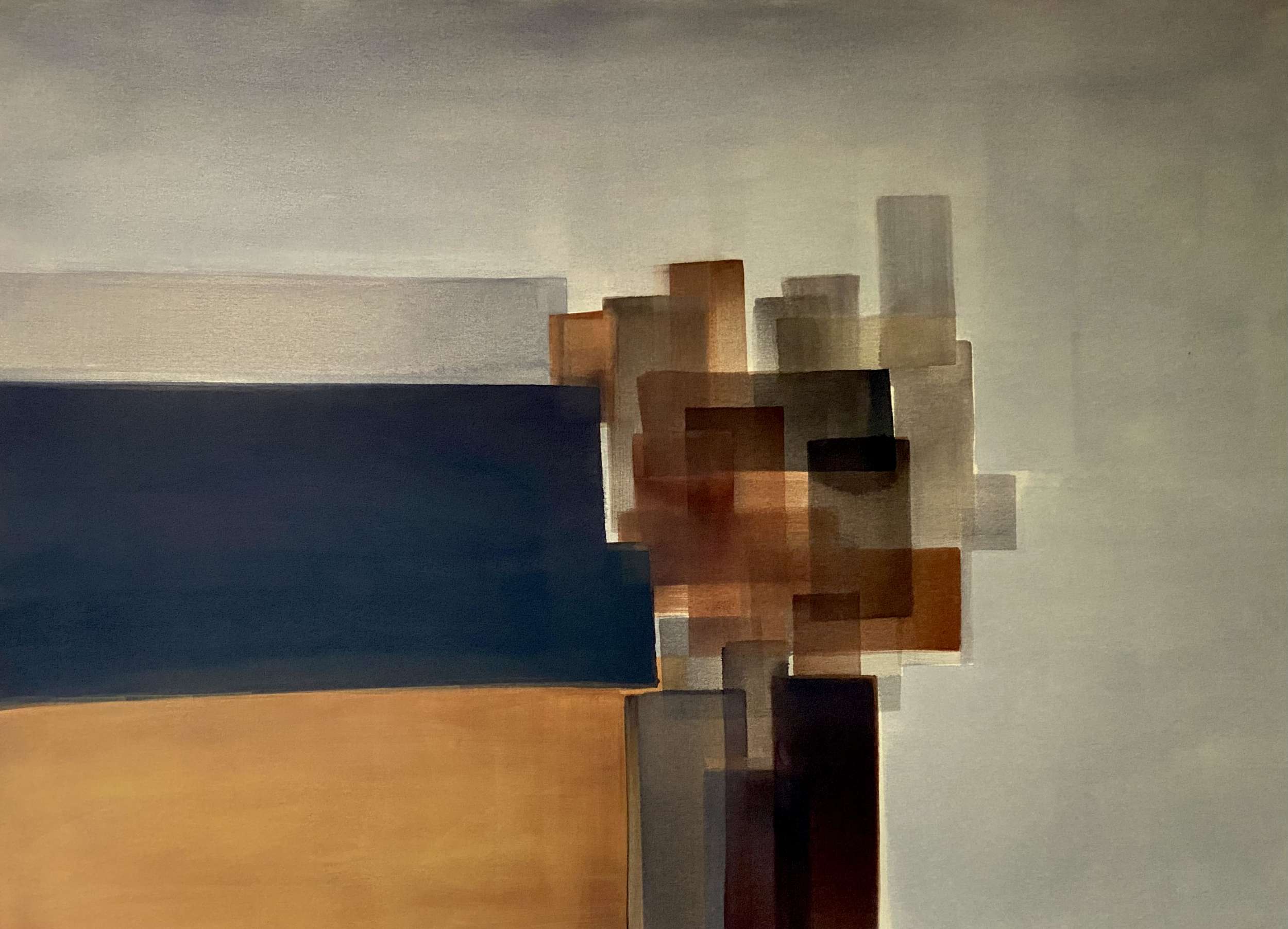
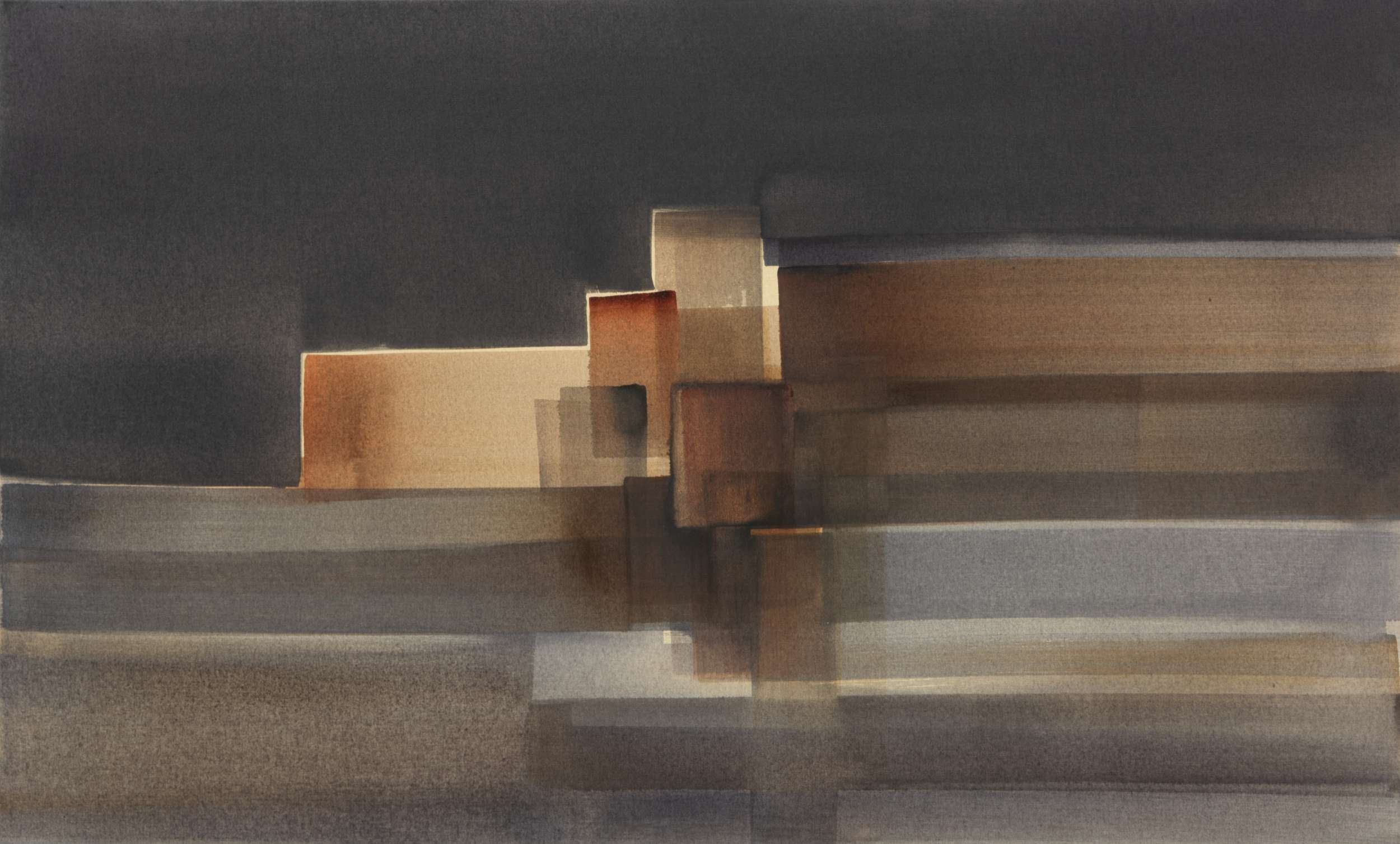
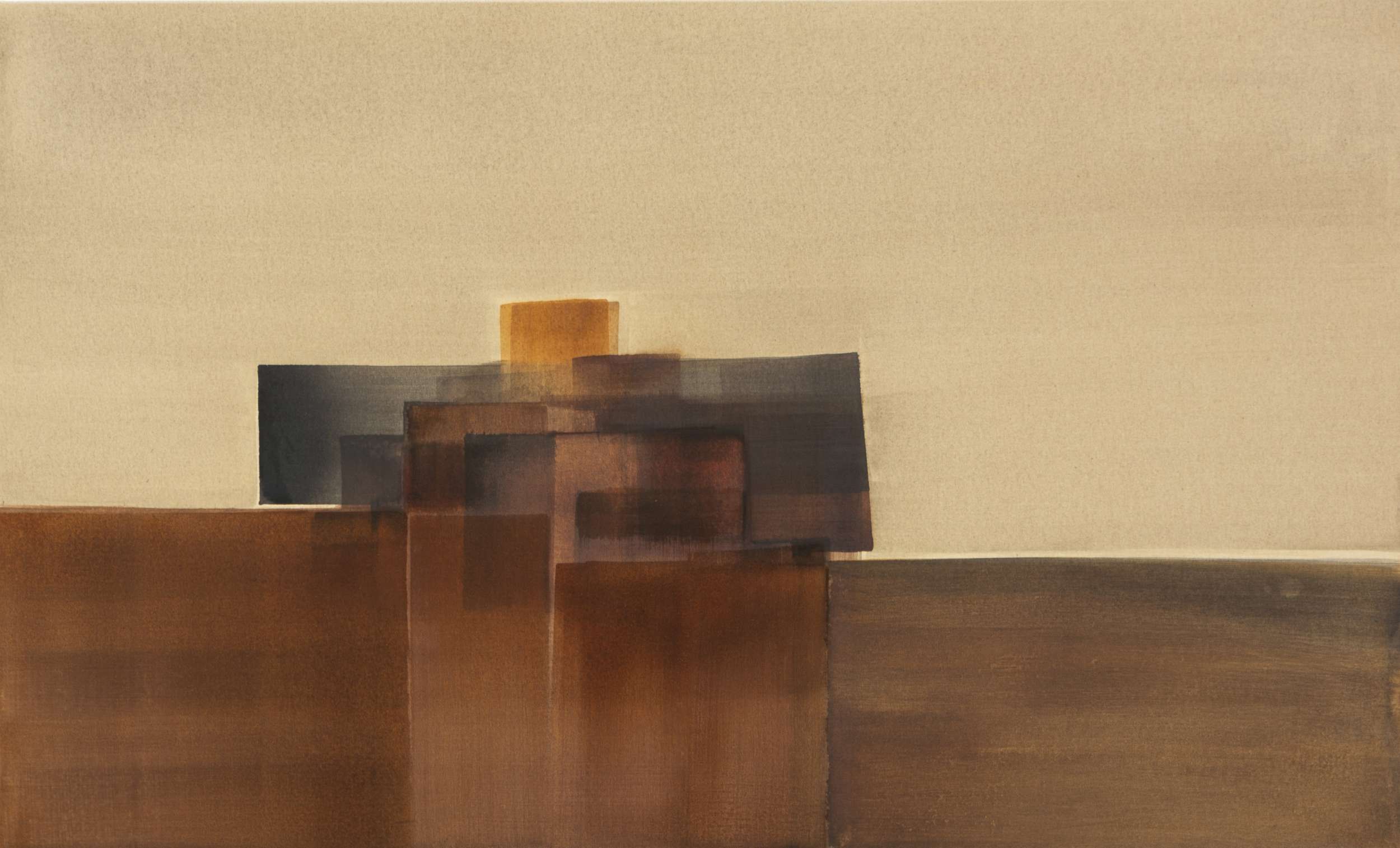
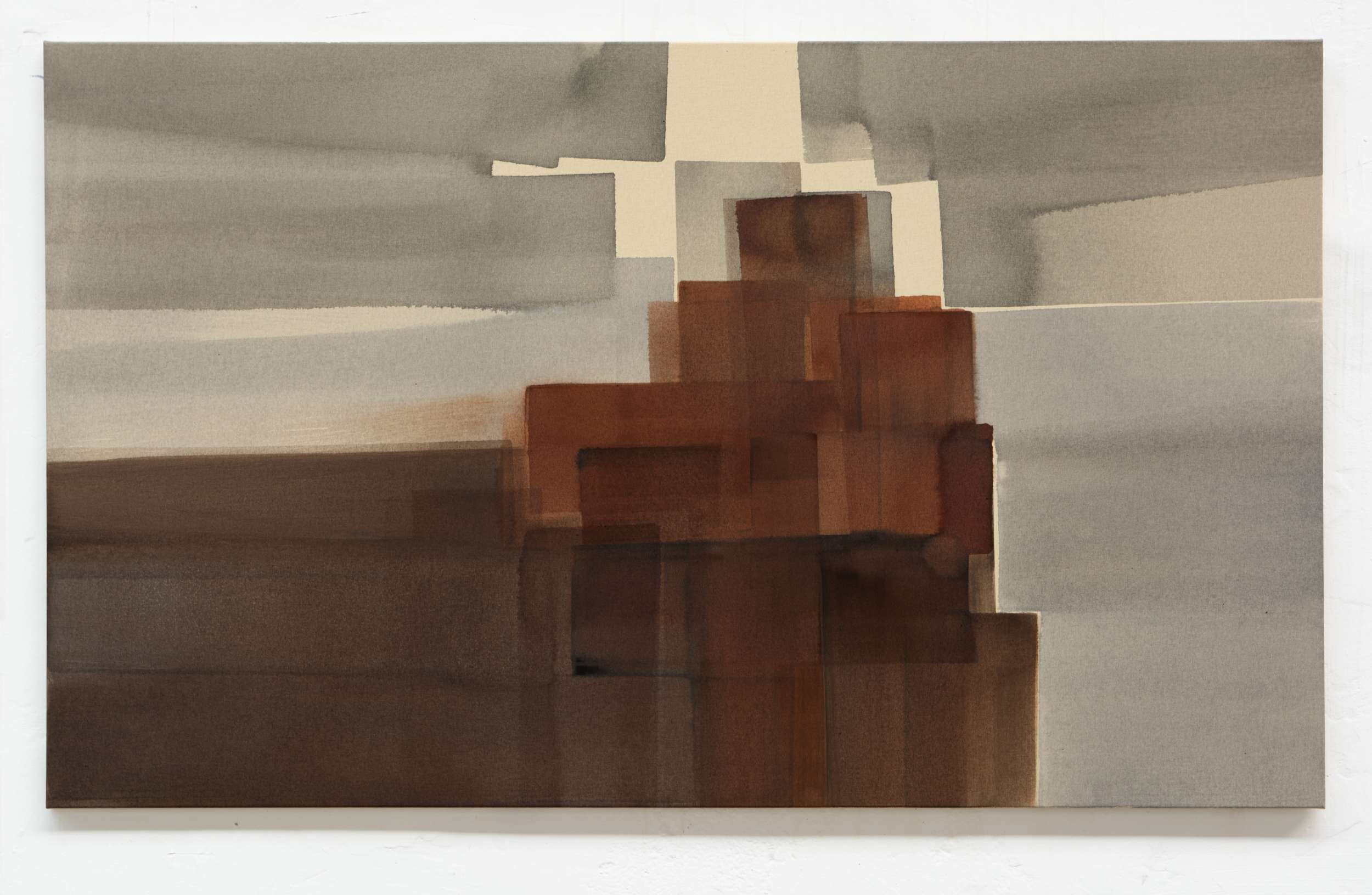
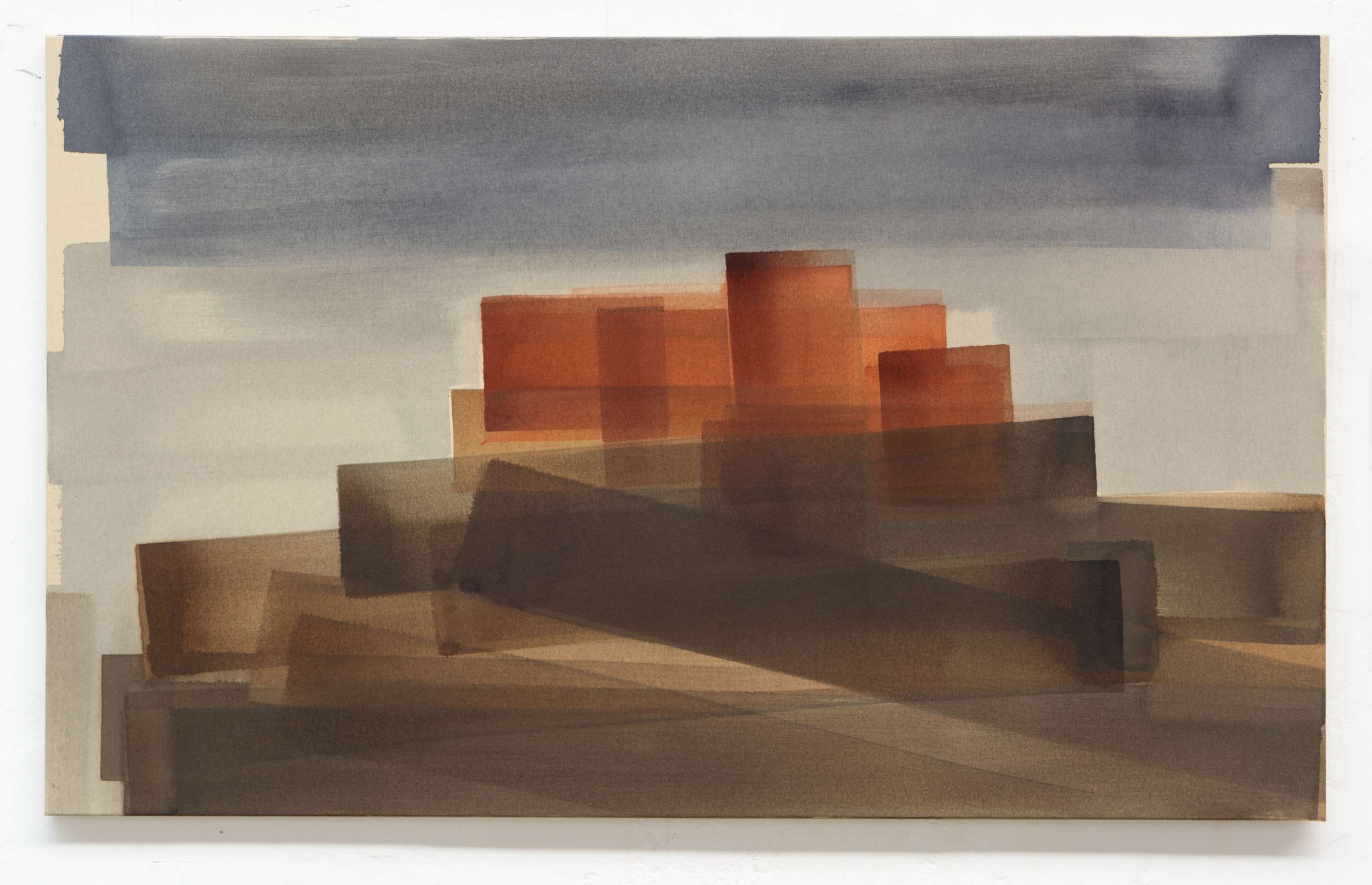
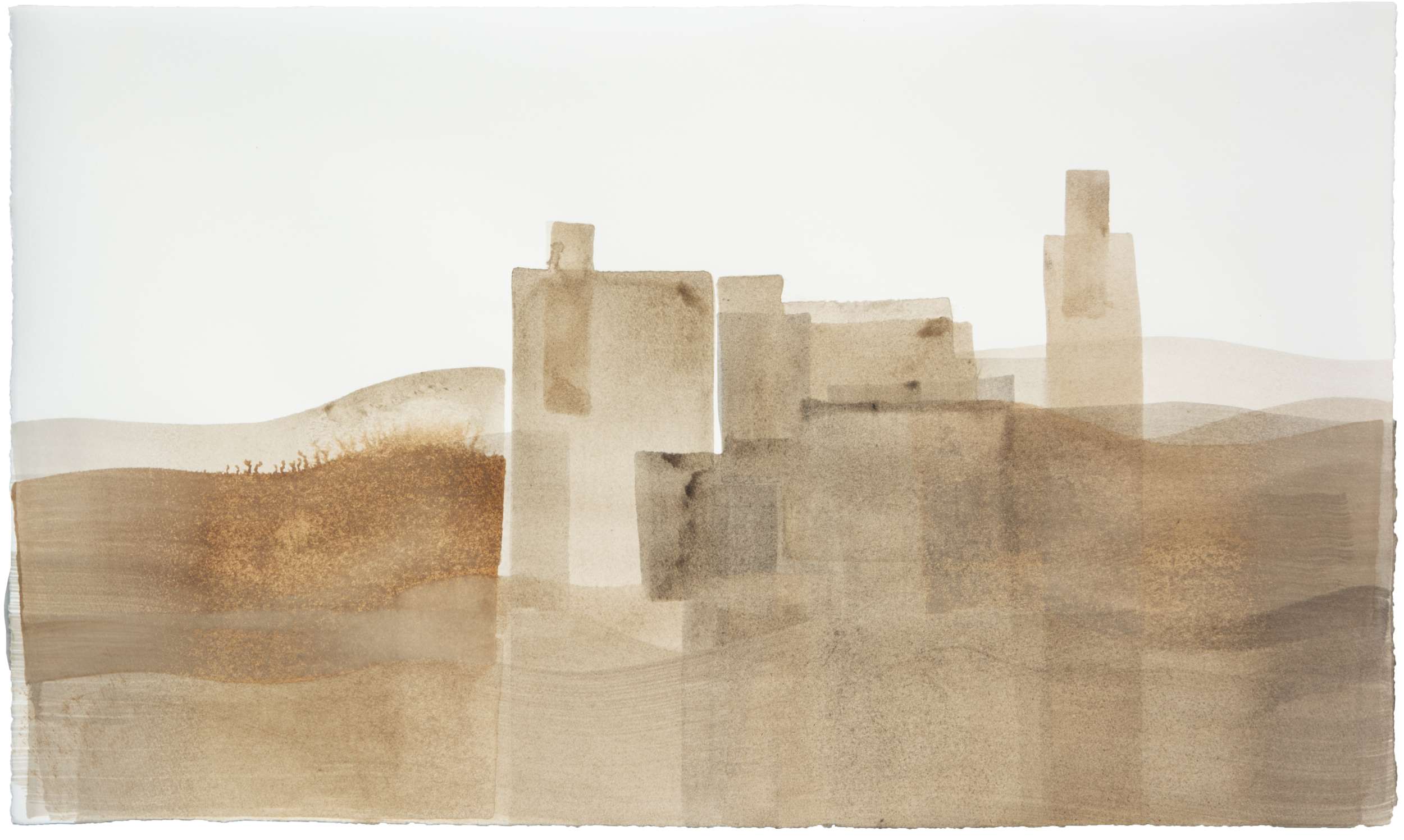
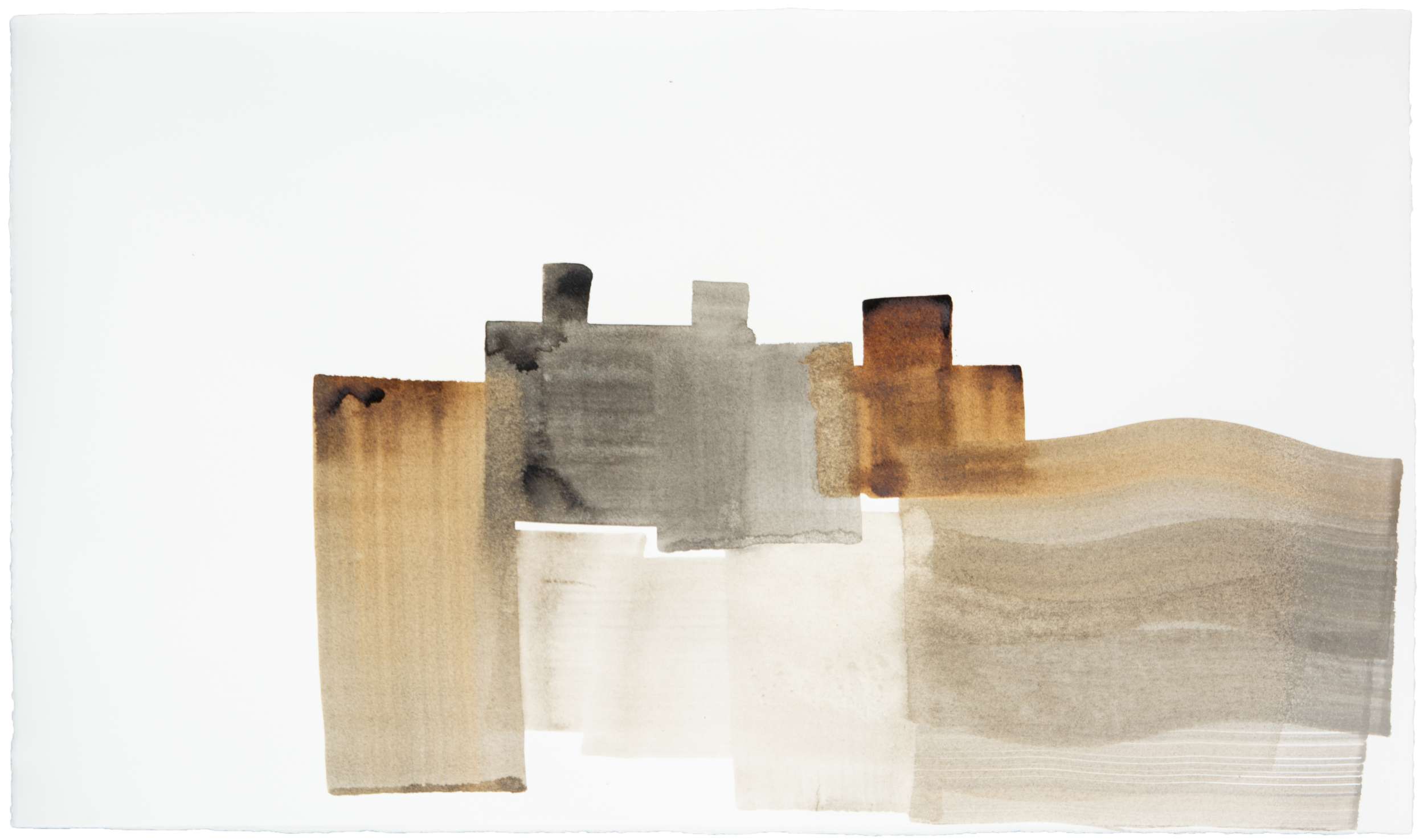
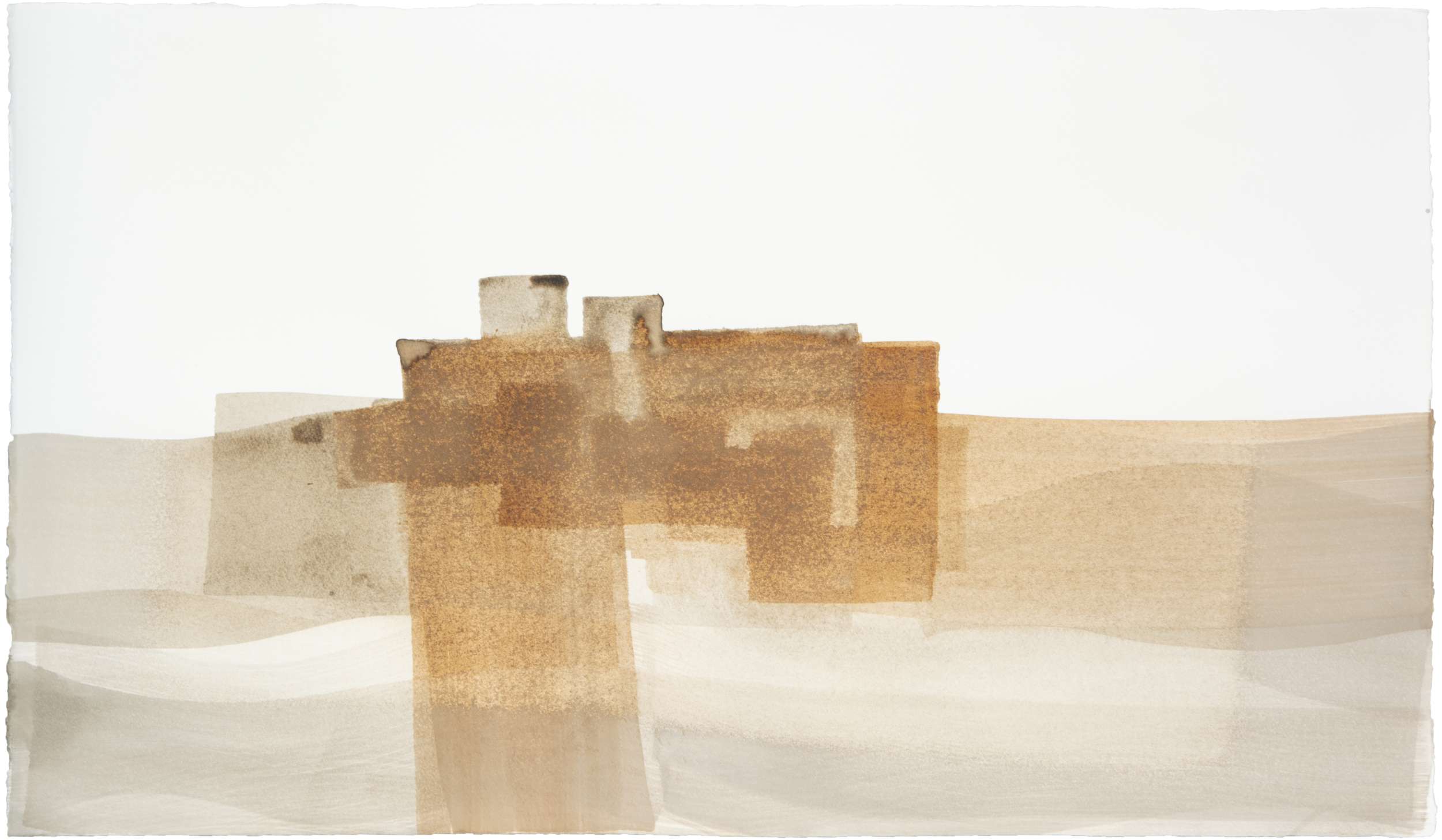
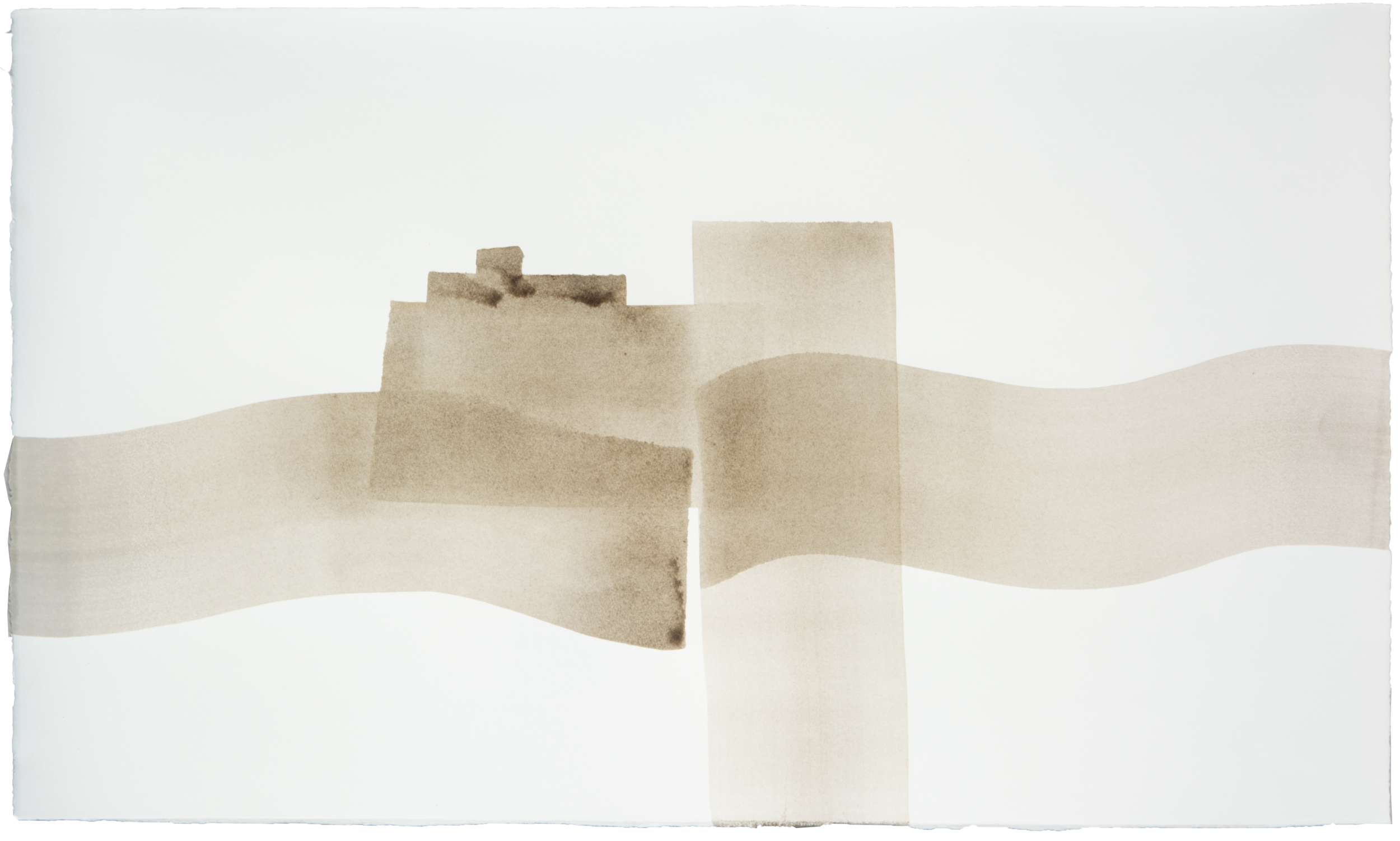
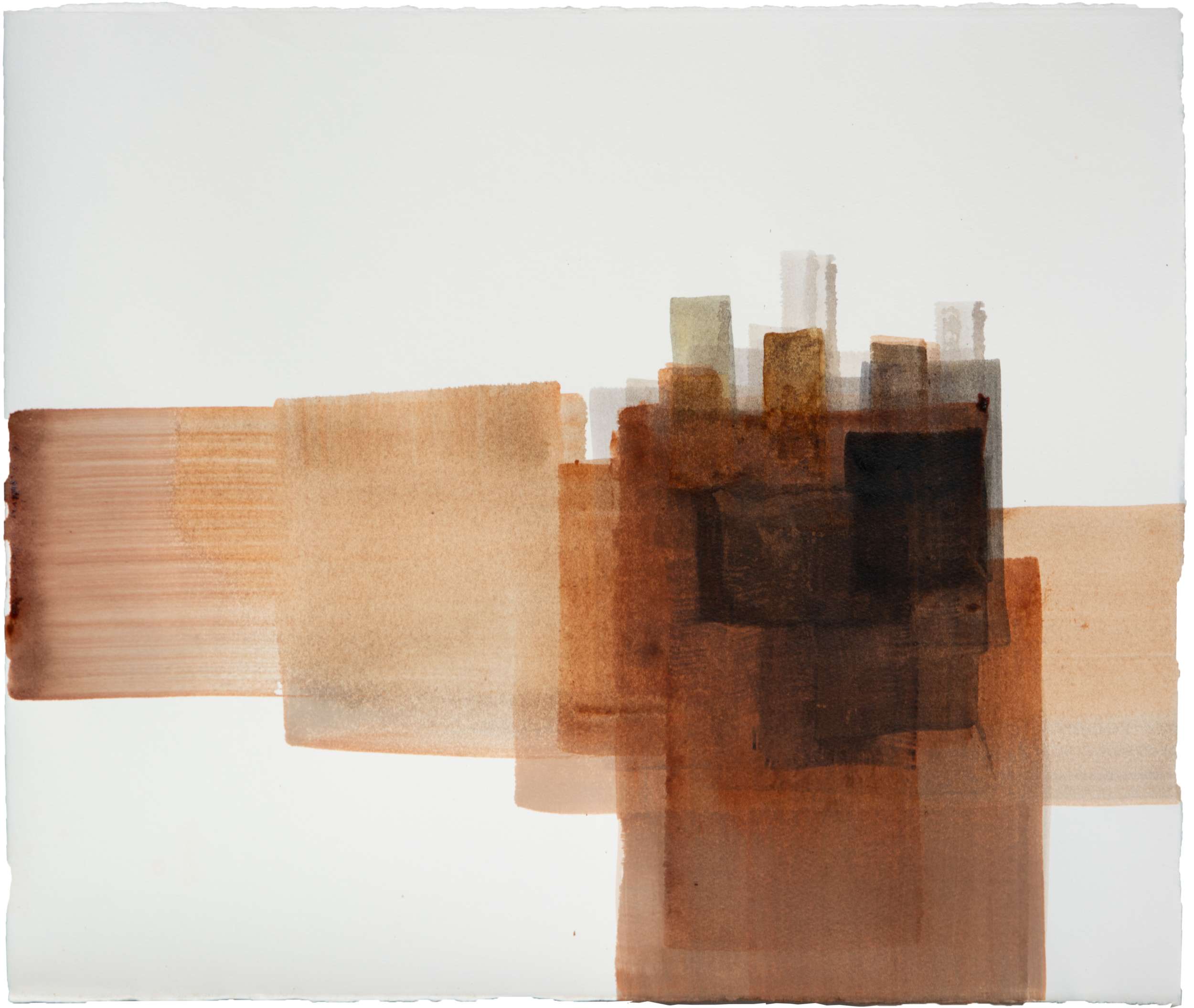
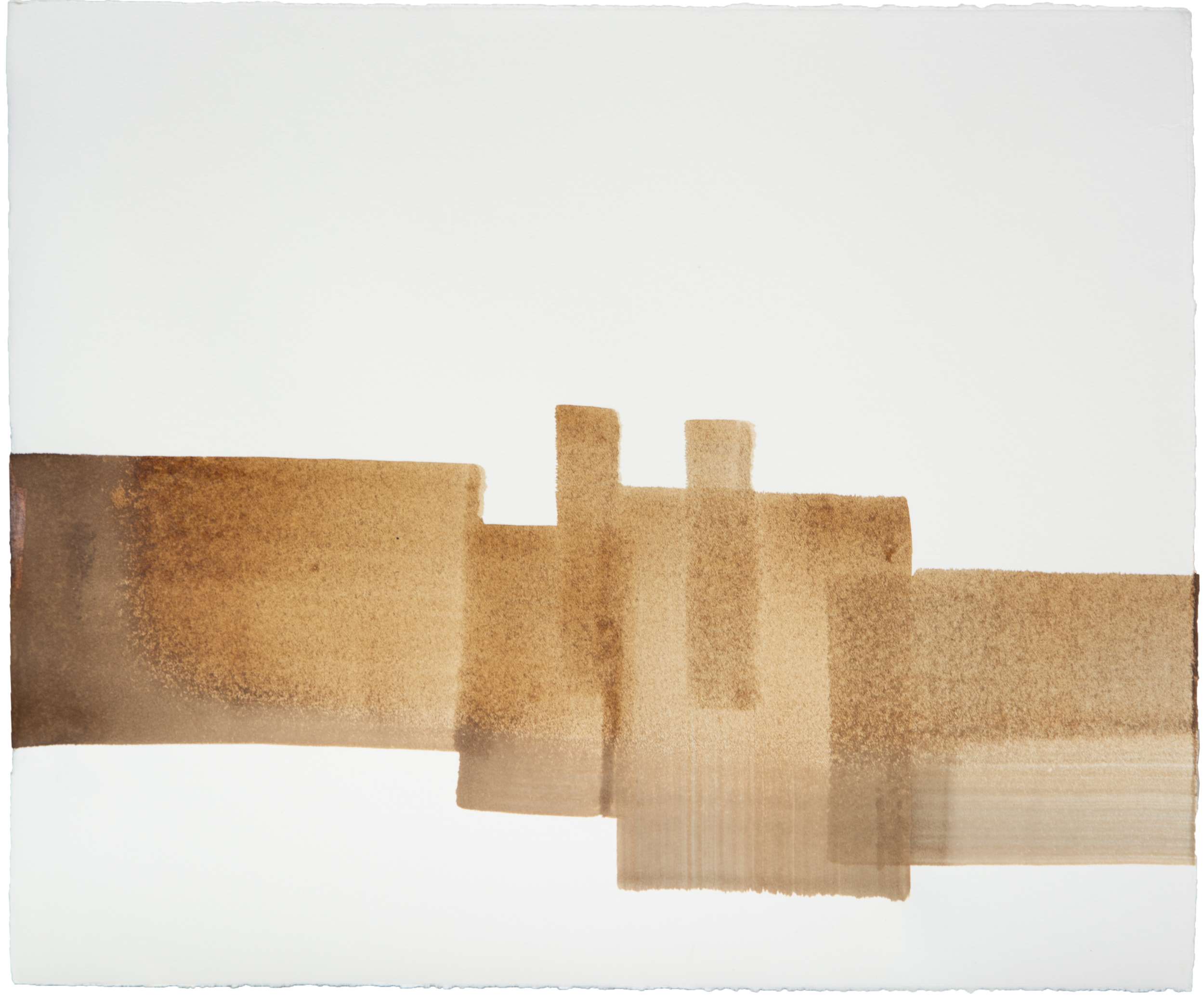
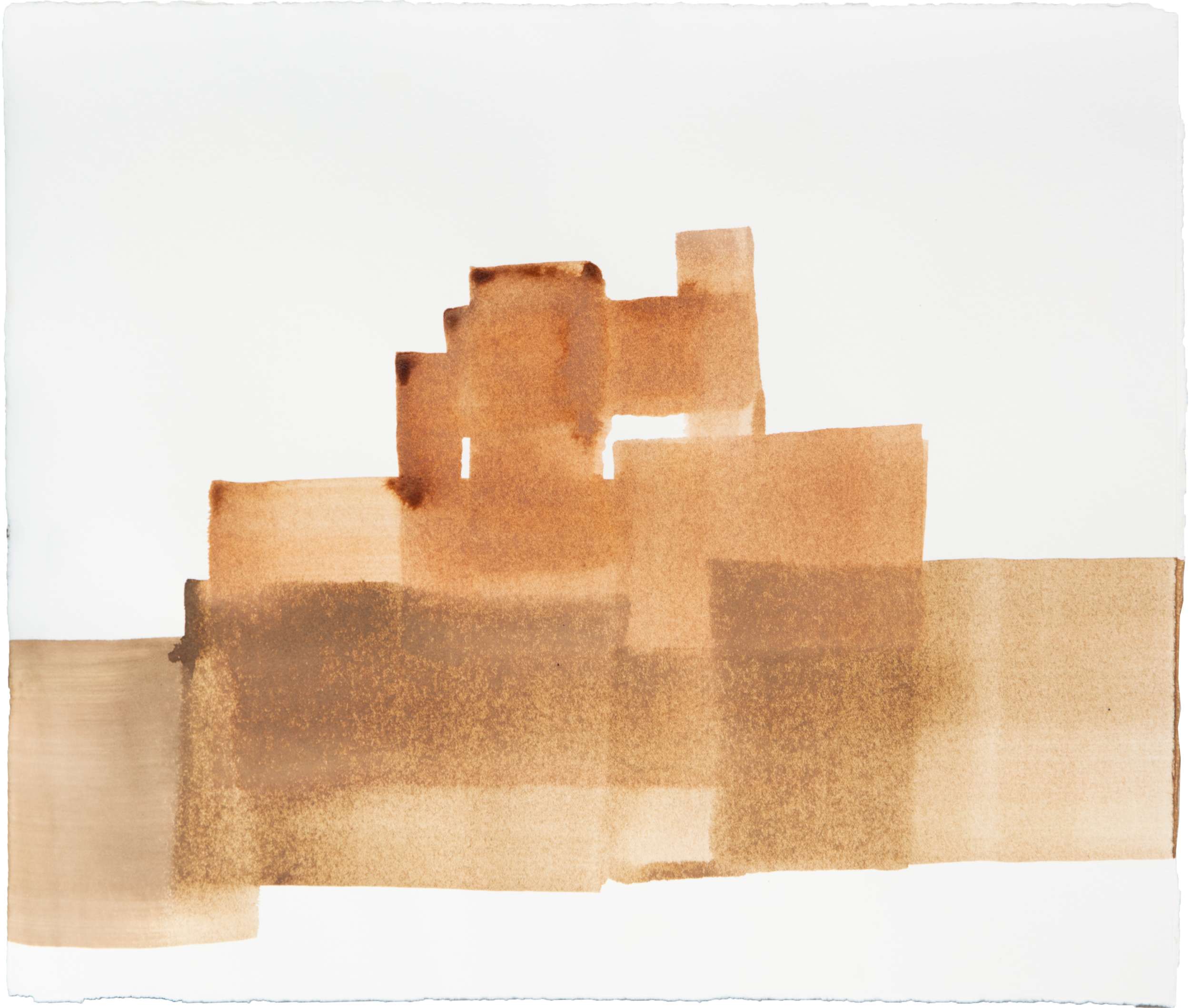
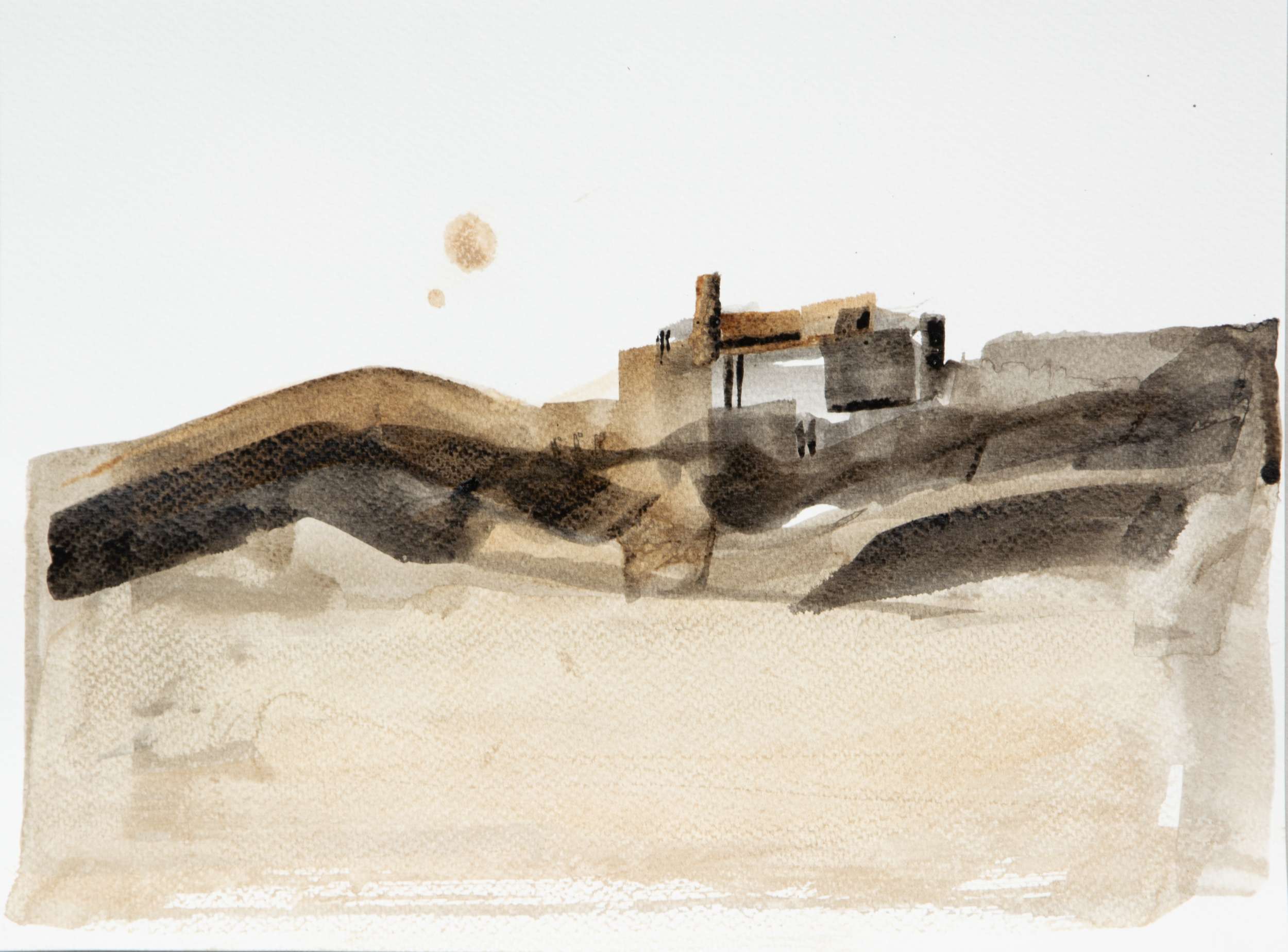
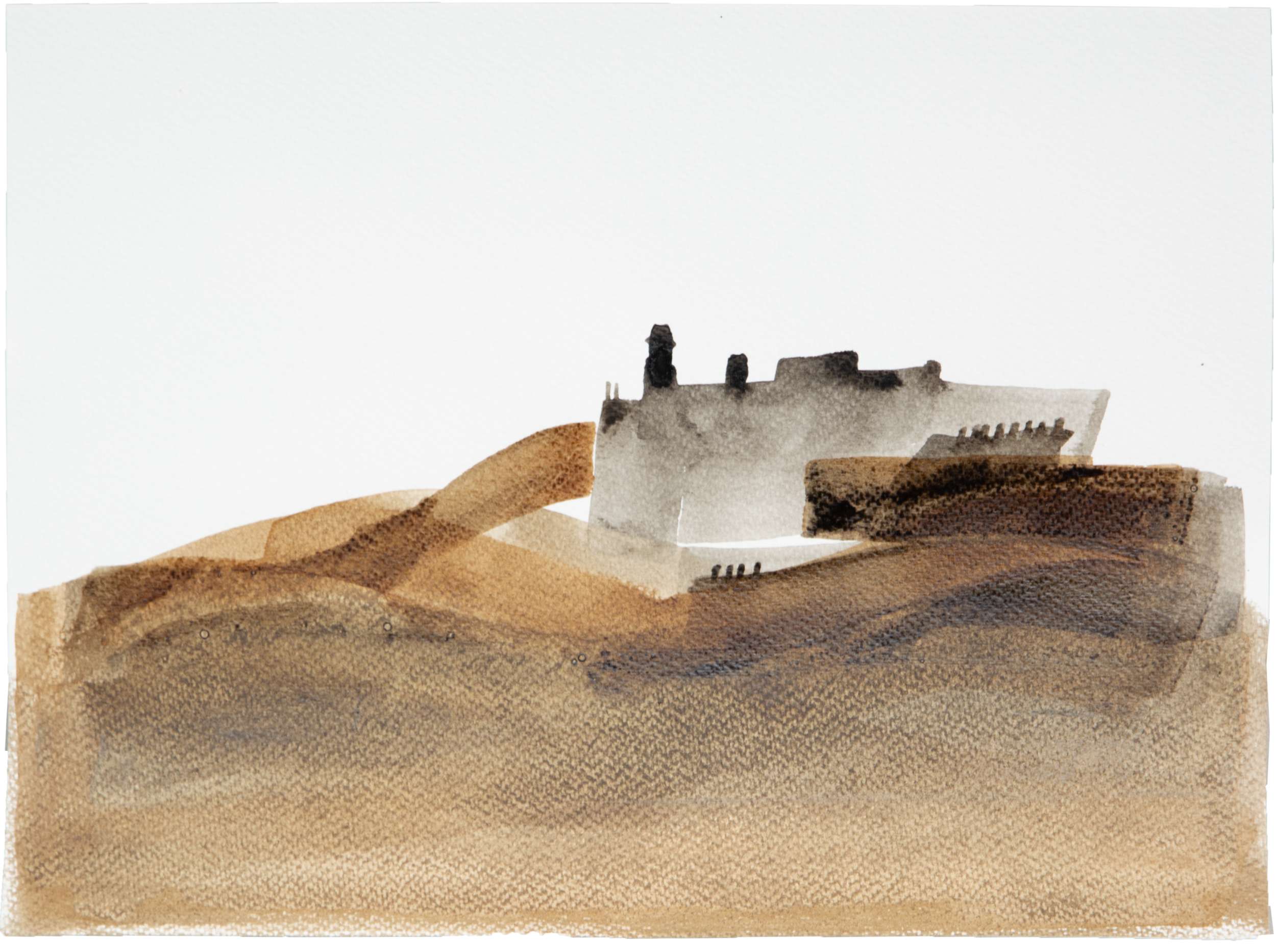
Der Hof Casagrande in der Nähe von Montepulciano ist Ausgangspunkt vieler spätsommerliche Ausflüge in die Landschaft. Flüchtige Skizzen zur Struktur werden in unmittelbarer Folge im Atelier zu großformatigen Variationen zu einem Thema: Städte auf und an den Erhebungen in der sanften Landschaft als räumliche Cluster.
Schellacktusche auf roher Leinwand / Papier.
La tenuta Casagrande, nei pressi di Montepulciano, è punto di partenza di numerose escursioni di fine estate nel paesaggio.
Schizzi fugaci sulla struttura diventano subito, in atelier, ampie variazioni su un tema: città poste sopra e accanto alle alture del dolce paesaggio, come cluster spaziali.
Inchiostro di gommalacca su tela grezza.
The Casagrande estate near Montepulciano is the starting point for many late-summer excursions into the countryside.
Fleeting sketches of structure are immediately transformed in the studio into large-format variations on a theme: cities on and along the elevations of the gentle landscape, conceived as spatial clusters.
EINLEITUNG
Toskana / Val d´Orcia
In meinen Jugenderinnerungen waren die italienischen Reisen meiner Familie nomadische Studien- und Arbeitsreisen. Immer wurde vor der Natur gemalt.
Jahrzehnte vergingen – für meine Mutter Margarethe Stolz-Hoke und meinen Vater Giselbert Hoke war die Toskana mittlerweile ein fester Bestandteil ihres Arbeitslebens geworden. Auch nach ihrer Trennung malten sie unabhängig voneinander in der ihnen vertrauten Landschaft. Hunderte Arbeiten zeugen von dieser leidenschaftlichen Auseinandersetzung mit dem Lebensraum Mittelitalien.
Im Spätsommer 2025 bereiste ich nach vielen Jahren Pause gemeinsam mit meiner Frau Ulli und engen Freunden wieder einmal die Gegend zwischen Montalcino und Montepulciano. Ich hatte nicht die Absicht, an die alte Familientradition des Malens in der Natur anzuschließen, hatte aber – wie immer – Papier und Tusche dabei.
Während unserer Ausflüge tauchten Motive auf, die ich aus den Bildern meiner Eltern zu kennen glaubte – eine eigenartige innere Betrachtung begann die realen Landschaften mit den Bildern meiner Eltern zu überlagern.
Mein Versuch, direkt vor der Natur zu malen, war nicht sehr ergiebig. Doch die Eindrücke befeuerten meine Lust, es in unserer Unterkunft am Hof Casagrande bei Montepulciano ohne Vorgaben zu versuchen.
Eine Serie schnell hingeworfener Papierarbeiten in der von mir seit Jahren praktizierten Sumi-e-Technik brachte die Arbeit ins Fließen.
Dieses nahezu absichtslose Beginnen mit einem Strich auf dem weißen Blatt eröffnet unmittelbar Räume. Diese Räume spiegeln in einer Art Paraphrase die Raumerfahrung der Gegend, ohne die Gestalt konkreter Orte zu beschreiben. Trotzdem tauchen architektonisch anmutende Cluster auf – wie ein Echo der toskanischen Städte. Fließende Landschaften entwickeln sich, und hin und wieder glaubt man den Monte Amiata, Pienza oder Montepulciano etc. zu erkennen. Erst im Nachhinein synchronisieren sich manche Zeichnungen mit realen Orten.
Ein Spiel der Poesie und der Abstraktion.
Der Anfang war gemacht. In den folgenden Monaten verlagerte sich die Arbeit in meine Ateliers in Saager und in Berndorf.
Großformatige Leinwände und Papierarbeiten wechselten einander ab, und solange die Spannung anhielt, blieb ich beim Thema.
Jetzt, im beginnenden Frühling, tauchen wieder figürliche Arbeiten auf; sie haben noch immer etwas mit der Casagrande Serie zu tun, eröffnen aber neue Räume und entwickeln sich selbstständig.
Aber das ist eine andere Geschichte.
Tomas Hoke, März 2026
INTRODUCTION
Tuscany / Val d’Orcia
In my childhood memories, my family’s journeys to Italy were nomadic trips of study and work. Painting always took place outdoors, directly in front of nature.
As the decades passed, Tuscany gradually became an integral part of the working lives of my mother, Margarethe Stolz-Hoke, and my father, Giselbert Hoke. Even after their separation, each of them continued to paint independently within the landscape that had become so familiar to them. Hundreds of works bear witness to this passionate engagement with the living environment of Central Italy.
In the late summer of 2025, after many years away, I travelled once again through the region between Montalcino and Montepulciano together with my wife Ulli and close friends. I had not intended to reconnect with the old family tradition of painting in nature, yet as always I had paper and ink with me.
During our excursions, motifs emerged that seemed strangely familiar from my parents’ paintings. A curious inner process began, in which the real landscapes were gradually overlaid by the images I carried within me from their work.
My attempts to paint directly in front of nature proved not particularly productive. Yet they sparked the desire to continue working back at our accommodation at the Casagrande farm near Montepulciano – this time without any predefined intention.
A series of rapidly executed works on paper, created in the Sumi-e technique I have practiced for many years, set the process in motion. This almost unintentional beginning – a single stroke on the white sheet – immediately opens up spaces.
In a kind of paraphrase, these spaces reflect the spatial experience of the region without describing the form of specific places. At times, clusters reminiscent of architecture appear, echoing the Tuscan towns. Flowing landscapes unfold, and now and then one believes to recognize Monte Amiata, Pienza, or Montepulciano. Only afterwards do certain drawings seem to align with real places. It is a play between poetry and abstraction.
The beginning had been made. In the months that followed, the work shifted to my studios in Saager and Berndorf.
Large-format canvases alternated with works on paper, and as long as the tension remained, I stayed with the theme.
Now, with the arrival of early spring, figurative works are beginning to reappear. They still carry traces of the Casagrande series, yet they open new spaces and begin to develop independently.
But that is another story.
Tomas Hoke, March 2026
INTRODUZIONE
Toscana / Val d’Orcia
Nei ricordi della mia giovinezza, i viaggi della mia famiglia in Italia erano viaggi nomadi di studio e di lavoro. Si dipingeva sempre davanti alla natura. Passarono i decenni – per mia madre, Margarethe Stolz-Hoke, e mio padre, Giselbert Hoke, la Toscana era ormai diventata una parte stabile della loro vita artistica; anche dopo la loro separazione continuarono a dipingere, indipendentemente l’uno dall’altra, nel paesaggio a loro familiare. Centinaia di opere testimoniano questo intenso confronto con lo spazio vitale dell’Italia centrale.
Alla fine dell’estate del 2025, dopo molti anni di pausa, tornai a visitare con mia moglie Ulli e con amici cari la regione tra Montalcino e Montepulciano. Non avevo l’intenzione di riallacciarmi alla vecchia tradizione familiare di dipingere nella natura, ma avevo con me, come sempre, carta e inchiostro.
Durante le nostre escursioni emersero motivi che credevo di conoscere dai dipinti dei miei genitori – una strana osservazione interiore cominciò a sovrapporre ai paesaggi reali le immagini dei loro quadri. Il mio tentativo di dipingere direttamente davanti alla natura non fu molto produttivo, ma accese il desiderio di provarci senza premesse nel nostro alloggio al podere Casagrande, presso Montepulciano.
Una serie di lavori su carta, tracciati rapidamente nella tecnica Sumi-e che pratico da anni, mise il lavoro in movimento. Questo iniziare quasi senza intenzione, con un singolo tratto sul foglio bianco, apre immediatamente degli spazi. In una sorta di parafrasi, questi spazi riflettono l’esperienza spaziale di quella regione, senza descrivere la forma di luoghi concreti.
Eppure compaiono gruppi dall’aspetto architettonico come un’eco delle città toscane; paesaggi fluidi si sviluppano e, di tanto in tanto, sembra di riconoscere il Monte Amiata, Pienza, Montepulciano ecc. – solo a posteriori alcuni disegni si sincronizzano con luoghi reali.
Un gioco di poesia e astrazione.
L’inizio era fatto. Nei mesi successivi il lavoro si spostò nei miei atelier di Saager e Berndorf. Grandi tele e lavori su carta si alternavano e, finché la tensione rimaneva viva, rimasi fedele al tema.
Ora, all’inizio della primavera, riappaiono lavori figurativi: hanno ancora qualcosa a che fare con la serie Casagrande, ma aprono nuovi spazi e si sviluppano in modo autonomo.
Ma questa è un’altra storia.
Tomas Hoke, Marzo 2026
weniger anzeigen >